
How trusted voices turn an ECI from “nice idea” into a million names
Collecting one million signatures across 27 EU countries is no walk in the park. You need people in different cultures to not only notice you but also trust you enough to sign — even though for many it may be the first time they will be hearing of the European Citizens’ Initiative. Mainstream media seldom cover grassroots stories, and even less so the ones that happen elsewhere, on the EU level. Your local partners, usually civil society organisations or informal groups, may not have a large online followership of their own, and social platforms increasingly reduce the organic visibility or classify activists’ outreach as “political”, limiting the possibility to use paid social media campaigns to reach potential initiative supporters.
The shortcut isn’t shouting louder—it’s borrowing trust. ECIs turn into movements when citizens hear about them from people they already believe: a pop star, a TV celebrity, a prominent YouTube content creator, a respected professional, a blogger —or, at the right moment, a head of state. For ECIs, that can be the difference between obscurity and scale. Below is your field guide to those personas and the channels that actually move signatures.
The pop icon
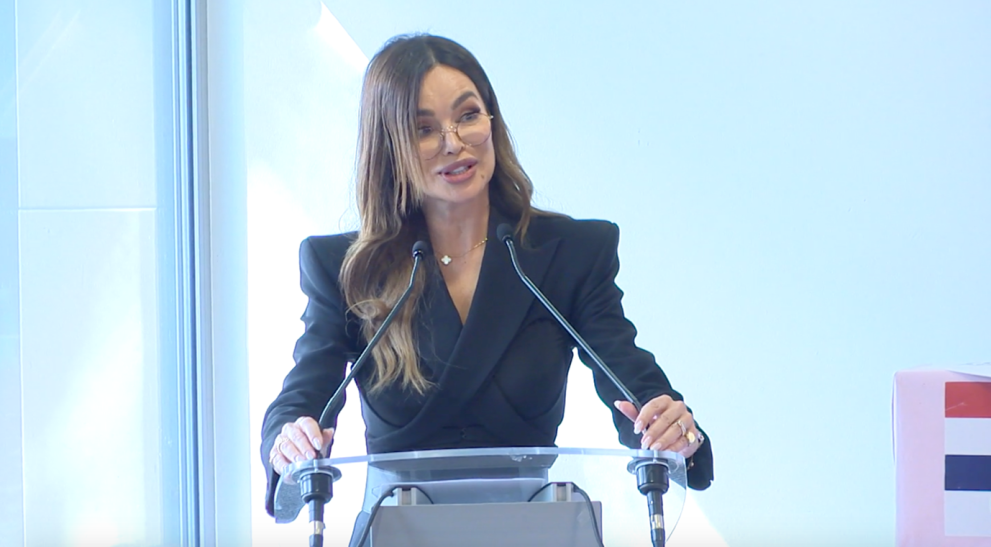
On September 1, 2025, Severina took a stage quite different than the ones she’s used to. At a Brussels press conference, the Croatian pop star spoke of her support for women’s rights and for the European citizens’ initiative My Voice – My Choice which had just officially submitted all verified over 1 million signatures to the European Commission.
One of the most recognisable pop artists in the former Yugoslav region, Severina has been active since the 1990s and represented Croatia at Eurovision 2006, becoming a household name far beyond her home country. Her digital footprint is substantial: 1,4 million followers on Instagram, 1 million on Facebook and an official YouTube channel with hit videos in the tens of millions. One of her top hits, recorded in duet with Bulgarian pop-folk superstar Azis has over 85 million views alone. Add the countless mainstream TV appearances and live tours in Croatia, Slovenia, Bosnia and Herzegovina, Serbia, North Macedonia, and beyond and you’ll see why so many were happy to sign the ECI she stood by (and why so many only wished they could, as their countries are yet to attain EU membership).
The TV journalist and activist

Next on stage in Brussels was Anastasia (Natasa) Giamali, a famous Greek journalist and TV anchor—currently presenter at MEGA TV and a regular contributor for international channels such as BBC, Al Jazeera, Channel 4, France24 and TRT. Her special interest in politics and social issues, such as inequality of income, gender and race made her a logical ambassador of My Voice My Choice.
She also showed how controversy fuels reach:
Her mix: a national broadcast TV (MEGA) for mainstream reach into households beyond activist circles; Instagram Reels for short, persuasive explainers and calls-to-action—her primary engine for rapid mobilisation; and opinion columns to legitimise narratives and give longer-form context that other outlets can quote.
And it’s not only My Voice My Choice! To name just a few others who have already made it:
- Stop Destroying Videogames ECI unlocked a late surge and topped 1 million supporters by partnering with star gamer content creators and YouTubers, gathering almost a million signatures in under one month;
- Ban on conversion practices reached 1 million supporters almost miraculously in the last two weeks of their campaign, by stacking pop-culture megaphones like Angèle with political heavyweights like French President Emmanuel Macron;
- Stop Finning – Stop the Trade also changed their fortunes in the very last 20 days of the campaign, succeeding to mobilise influencers and popular figures: from YouTubers to famous marine biologists, to filmmakers and to Hollywood stars like Nina Dobrev and Alec Baldwin.
Why this type of marketing works?
Partnering with influencers and opinion leaders works because they already have something ECI campaigns often lack: a trusted relationship with a sizeable pan-European community. Whether it’s gamers following their favourite streamer, architecture enthusiasts supporting a creative collective (check HouseEurope), or patients’ friends and relatives listening to medical advocates (check PsychedeliCare), these audiences are active, loyal, and primed to respond.
Influencers translate the sometimes abstract idea of “signing an Initiative” into personal motivation. A short video, a live stream, or a heartfelt post can mobilise thousands within hours because the message comes from someone the audience already believes in.
Another reason it works is algorithmic reach. Social media platforms often restrict “political” campaigns, but they reward engagement around creators. If an influencer’s post sparks likes, comments, and shares, it gets pushed further – achieving visibility an official campaign page would struggle to buy.
What are the risks?
The flip side is that influencer-driven marketing also carries significant risks:
- Loss of control over the message – once a campaign enters the world of influencers, you can’t fully control how it is framed. Supporters may use language or arguments you wouldn’t endorse;
- Controversy as a double-edged sword – debate and even attacks, as seen with ‘Stop Destroying Videogames’ and ‘My Voice My Choice’, can fuel visibility and signatures. But they can also escalate into polarisation, harassment or misinformation that could endanger the cause;
- Dependence on personalities and culture – what works brilliantly with one creator in one country might fall flat with another somewhere else. And if an influencer loses credibility, your campaign could be dragged down with them;
- Short-term boost, long-term fatigue – viral spikes can be impressive, but they rarely sustain momentum. A campaign needs broader grassroots organisation and coalition work to stay alive once the spotlight fades;
- Last but not least: political risks – by partnering with public figures (or even passively being endorsed by them), you may be seen as aligning with their personal or party-political views, even if that’s not the case. If a political figure is vocal about divisive issues, your initiative risks being dragged into partisan conflicts and framed as “belonging” to one political camp. This can alienate potential supporters across the spectrum, deepen division lines, undermine the non-partisan nature that ECIs rely on to gather signatures in all 27 countries, and complicate how citizens or the media perceive your campaign.
The bottom line
Influencers can turbo-charge your campaign, but they can’t replace the basics – clear messaging, a strong network, and steady outreach across all, or most 27 countires.
Working with influencers can give an ECI the kind of visibility and urgency that standard campaigning and official channels rarely achieve. A single post or video by a personality with a million followers can get hundreds of thousands to engage with your cause where mainstream media won’t pick up the story, and it can cut through the platform restrictions that often label ECIs as “political content.” But influencers aren’t a silver bullet. They can amplify your cause, not build it. Collecting one million signatures across 27 fragmented national contexts still demands steady grassroots work, coalition-building, and communication that speaks beyond one community or audience.
Planning a campaign and in need of advice? The Forum provides tailor-made and independent advice to current and future organisers of European citizens’ initiatives on legal, campaigning, fundraising or on any other relevant issue. Ask an expert!
About the author:

Petko Georgiev is the director of ProMedia, a seasoned media and communications expert with a long record of developing media content, designing and implementing communication strategies for nongovernmental organisations, public institutions and corporate clients; and training communications, media management and content production practitioners in many countries of the EU and beyond. He is currently the senior communications expert working for ECAS on the implementation of the European Citizens’ Initiative Forum.
The opinions expressed on the ECI Forum reflect solely the point of view of their authors and can in no way be taken to reflect the position of the European Commission or of the European Union.

Leave a comment