
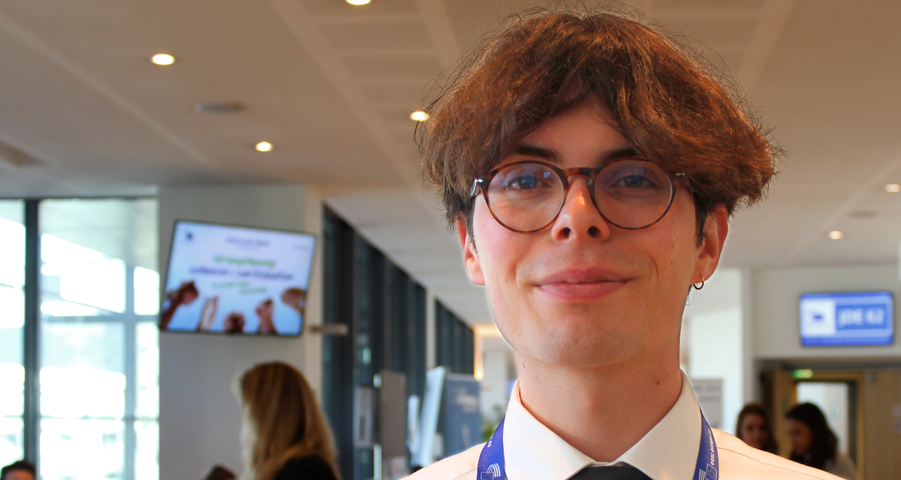
“We had lost hope,” says Matteo Garguilo, organiser of the European citizens’ initiative calling to ban conversion practices. And then, they hit the jackpot when Belgian singer Angèle called on her fans to support the ECI on Instagram.
The two-person team behind the ECI had ten days to go from below 250,000 to one million signatures when they decided to give their campaign one last push. This time, unprecedented support started pouring in.

For the next ten days, Garguilo barely slept trying to keep on top of the campaign and coordinate efforts in different countries. The European Commission’s servers were literally flooded with the traffic the campaign suddenly generated, with 900,000 people visiting the ECI website in one day.
“I think the final days of the ECI were insane,” says Garguilo. “We kind of lost control of some of it, but I think we still had a hand on the strategy.”
Garguilo’s advice for other organisers? Don’t lose hope, form a good team and keep reaching out for support, no matter how much rejection you face.
Find influential advocates
The ECI’s miracle success is largely owed to the support of French-speaking artists. Among others, the team reached out to Angèle in a last-ditch effort, because they needed more signatures from Belgium; and she was known for being LGBT-friendly.
The organisers approached her, and she quickly agreed. Her messaging was simple and persuasive: she promised to give a kiss to her (famous) dog for each fan that signed the ECI.
After Angèle and the French artist Hoshi gave their support, other artists followed, and signatures started pouring in. In a few days, they were up by 500,000.

The team observed a similar dynamic in the political realm too. Thanks to connections through a feminist organisation, the French Left party was the first do endorse the ECI, after which the Socialists and the Greens backed it too.
Then, the ECI caught the eye of political heavyweights. On the final day of the campaign, the French President Emmanuele Macron posted about it on social media. About 30 minutes later, a post from the Slovenian prime minister Robert Golob followed.

Join forces with other ECIs
Slovenia was one of the target countries in the organisers’ last-ditch effort to garner enough signatures to pass the threshold in at least seven countries.
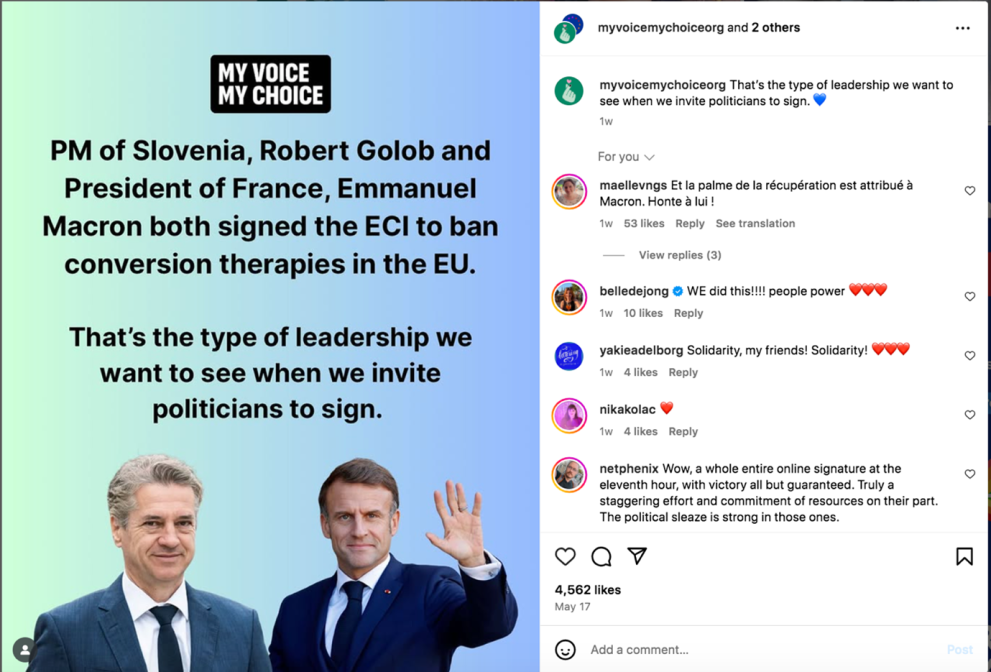
Garguilo and the team decided to ask for help from the organisers of a fellow ECI My Voice, My Choice, who come from Slovenia. They agreed to help, using their ECI network that allowed them to reach almost 1.2 million signatures earlier this year. (My Voice My Choice recently passed the one million signature threshold too.)
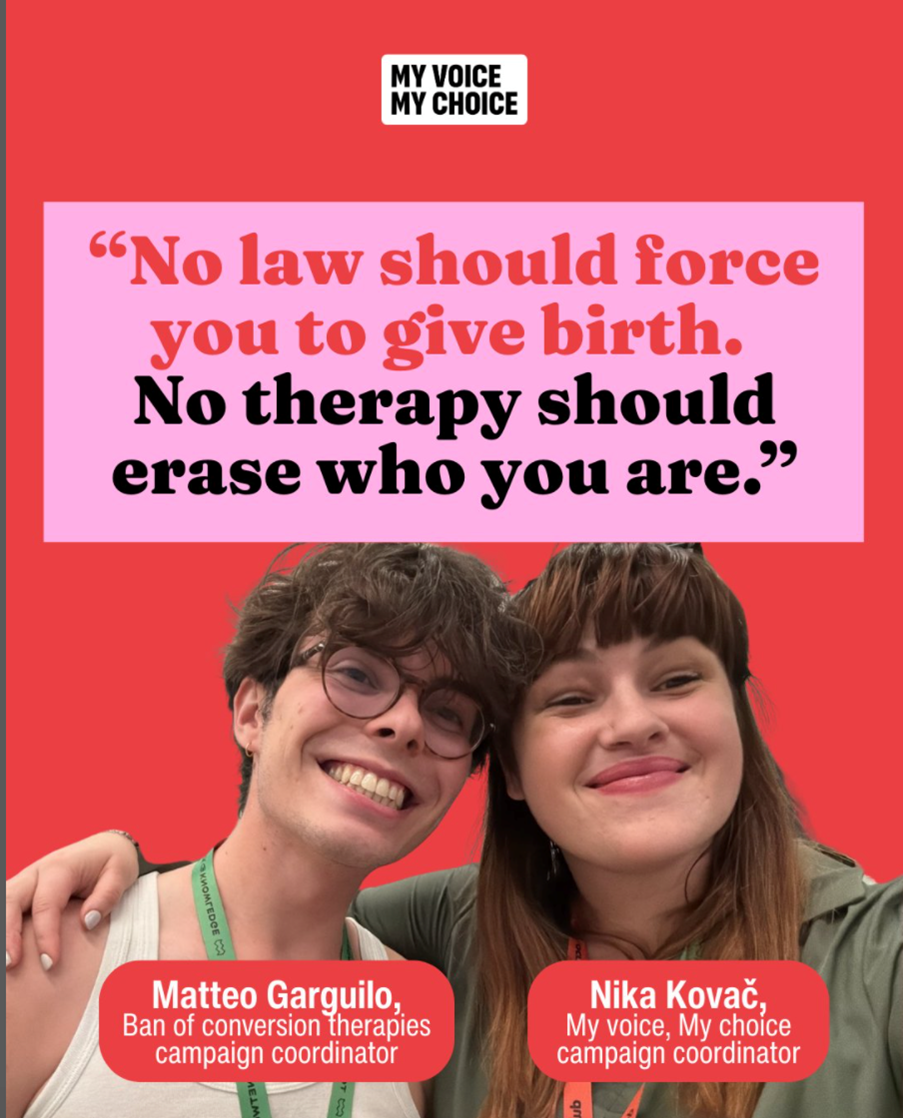
“We started doing everything together,” says Garguilo. “They have a lot of volunteers all over Europe and a lot of contacts in terms of organisations and personalities.”
The collaboration helped the team get through to Germany’s civil society networks. In Croatia, they managed to pass the country threshold in one day.
“Once we got one country, we moved on to another country, sending the followers off to reach out to people, whether LGBT influencers, LGBT singers, or women because in general, women are very supportive of LGBT rights,” says Garguilo.
Strategic timing
The campaign was strategically timed to start and end on 17 May, the international day against homophobia, biphobia and transphobia.
“It was the moment for all the political parties to talk about LGBTI rights and that's why we put it on this date,” says Garguilo.
The bet paid off. On 13 May, Emmanuele Macron shared his support for the campaign, and many others followed. The logic was simple: politicians had to acknowledge the occasion and show an initiative. The ECI gave them a low-hanging fruit.
Plus, the organisers knew people get enthusiastic when there is a feeling of urgency behind a campaign. Garguilo says he had seen this happen in Italy when a petition on citizenship gathered 450,000 signatures in five days after stagnating on 50,000 for months.
This urgency of the final race to one million paired with a spike in interest in LGBT+ rights turned out to be the perfect recipe for success.
Danish social media users were flooded with messages from French and English speakers about the initiative. Garguilo heard stories about the ECI being shared in a Spanish class in the Netherlands, and someone spending €150 to advertise the ECI. “It was more than our budget, because we didn’t have any budget,” laughed Garguilo.
Don’t underestimate a good team
At the end of the day, it was all an effort of a good team. ACT, the organisation behind the ECI, is just two people. But the network they formed and relied on led them to success.
In France, their biggest ally was the Instagram account @lecoindeslgbt, which helped spread the message. Its influence in getting French support was undeniable, as more than 50% of the signatures came from the country.
And @lecoindeslgbt was backed by the French feminist collective NousToutes. “They helped us a lot, and so we pushed a lot in France, and we had a few contacts in politics,” says Garguilo.
This strong backing was important, especially because the team did not feel supported by other big civil society organisations, which were reluctant to support an initiative they did not start themselves.
Read more from Matteo and Nika:
Building momentum: the funding and strategy behind the 'My Voice, My Choice' initiative
The story of another unexpected last-minute success:
Anatomy of a miracle: how the last 20 days of the Stop Finning EU campaign became a

Contributors
Goda NaujokaitytėGoda Naujokaitytė is freelance journalist specialising in European policy. She writes about the European Citizens’ Initiative for ProMedia.
The opinions expressed on the ECI Forum reflect solely the point of view of their authors and can in no way be taken to reflect the position of the European Commission or of the European Union.

Leave a comment