
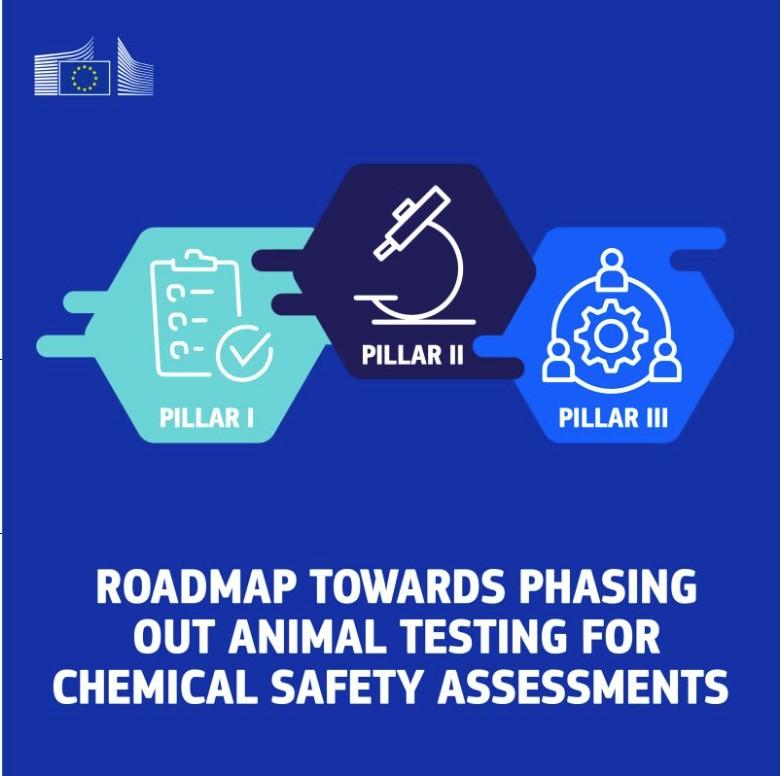
Three years after the successful “Save Cruelty-Free Cosmetics – Commit to a Europe Without Animal Testing” European citizens’ initiative collected more than 1.2 million valid signatures, the European Commission has presented its Roadmap towards phasing out animal testing for chemical safety assessments, following the pledge it made in its 2023 response to the successful ECI.
In 2022, the ECI passed the one-million-signature threshold, collecting 1,217,916 validated statements of support. When the ECI Forum interviewed organiser Kerry Postlewhite at the time, she explained why the coalition had chosen the ECI rather than an ordinary petition: it is rooted in the EU Treaties and creates a formal opportunity for citizens to put an issue before the European Commission.
On 25 July 2023 the Commission adopted its reply to this initiative, committing to prepare a Roadmap towards phasing out animal testing for chemical safety assessments by 2026. Three years later, after the adoption of the Roadmap, we spoke with Dylan Underhill of Cruelty Free International; Giorgia Pallocca of Humane World for Animals; Katy Taylor of the European Coalition to End Animal Experiments; and Julia Pochat of Eurogroup for Animals about what happened between signature success and the Roadmap – and what current and future ECI organisers can learn from it.
One million signatures are a milestone, not the end of the campaign
Reaching one million signatures takes enormous energy and coordination. But the organisers say that future campaigns should resist treating signature collection as the finish line.
After the successful verification of signatures, the campaign changes: organisers must follow policy processes, maintain the coalition and engage decision-makers. The advice is to plan for this phase from the beginning and retain people, expertise and resources for it.
Or, as Dylan Underhill put it:
Build the coalition to survive beyond signature collection
One of the coalition's biggest investments over the following three years was maintaining what Dylan Underhill described as “group cohesion”. The organisations met at least once – and often twice – every week, organised issue-specific meetings and introduced more formal governance arrangements.
Regular communication helped organisations with different histories, expertise and ways of working coordinate their positions and speak with a more unified voice. Future organisers should decide early who will coordinate follow-up, monitor policy developments, speak for the coalition and agree common positions.
Do not wait for the institutional process to set the campaign's pace
The ECI called on the European Commission to strengthen and enforce the EU ban on animal testing for cosmetics, modernise chemicals legislation to reduce reliance on animal testing, and develop a roadmap to phase out all animal testing for regulatory purposes. In its initial response in 2023, the Commission welcomed the initiative and agreed with its long-term objective of moving towards an animal-free regulatory system. While it did not propose immediate legislative changes in all the requested areas, it committed to developing a Roadmap to accelerate the replacement of animal testing in chemical safety assessments through a combination of legislative and non-legislative measures, increased support for alternative methods and closer cooperation with Member States, agencies and stakeholders.
The Commission's follow-up process included workshops and technical discussions, but gaps between formal moments of engagement risked losing momentum. The coalition therefore organised a multi-stakeholder roundtable between Commission-led workshops, bringing together experts from regulatory agencies, industry, academia and civil society. It developed a structured approach and concrete actions for regulatory reform, scientific progress, data-sharing, capacity-building and long-term implementation; the recommendations were published in a scientific journal and fed into the continuing Roadmap process.
By convening stakeholders and contributing evidence, Dylan Underhill said the NGOs kept themselves “at the forefront of everyone's minds” and continued making the case for having a seat at the table. The lesson for organisers is clear: following the institutional process is not the same as managing a post-ECI campaign.
Prepare to move from campaigning into technical and scientific work
The post-ECI phase may require very different skills from signature collection. “Save Cruelty-Free Cosmetics” had a broad political objective, but delivering change required highly technical discussions on chemical safety and scientific assessment.
The coalition could draw on existing scientific communities, research projects and experts from its member organisations to contribute to technical working groups. The coalition behind this ECI have been working with the PETA Science Consortium International throughout the ECI process. Future organisers should ask early what expertise they will need if the Commission engages seriously with their proposal. A public campaign may open the door, but policy follow-up can require lawyers, scientists, policy experts and technical specialists.
Use the ECI to bring people out of their silos
The Roadmap towards phasing out animal testing for chemical safety assessments covers multiple legislative areas and sectors. Before the ECI, campaigners often held separate conversations with different industries and institutions. The Roadmap process created spaces where scientists, agencies, regulators and industry could compare requirements and approaches directly.
An ECI can therefore do more than ask the Commission to act: it can create a common political objective around which previously separate policy discussions and expert communities connect. Organisers should consider who needs to be in the same room for change to happen.
Build on existing scientific expertise
The organisers stress the need to maintain regular communication with the Commission, agencies, industry and other stakeholders, and the importance of bringing concrete evidence when they believed the process was missing something.
Design an ECI around a big objective and deliverable steps
The organisers identify the design of the initiative itself as important. It combined a clear political objective that citizens could rally behind with concrete requests that could contribute to it. Their lesson is to pair a strong political goal with practical steps the Commission can potentially take; otherwise, the Commission may consider the broad objective but conclude that it cannot act as proposed.
“It's important to have an overall political ask in order to get the signatures and something that the public can get behind,” said Katy Taylor of the European Coalition to End Animal Experiments
Future organisers should ask themselves at the drafting stage: is the objective clear enough for citizens to support, and does the ECI contain concrete, legally and politically actionable steps? Both matter.
Is the ECI an effective tool for policy change?
An ECI can put an issue on the agenda, demonstrate public support and create a moment for engagement with decision-makers. But it does not replace campaigning.
“It is a good mechanism for putting things on the agenda, for driving public attention and support and creating an opportunity and a moment for engaging with decision-makers. But you just have to be ready to seize it when that opportunity comes,” said Dylan Underhill.
For the organisers of “Save Cruelty-Free Cosmetics”, the Roadmap presented three years after their successful ECI marks a major milestone. The Commission says it sets out clear and tangible steps towards replacing traditional animal testing for chemical safety assessments with innovative non-animal approaches.
For current and future organisers, the practical message is equally important: plan beyond one million signatures. Build a coalition that can stay together. Keep resources for follow-up. Bring in the expertise you will need. Understand the wider policy context. And be ready to turn the political opportunity created by your ECI into sustained action.
The signature collection may end after 12 months. The work needed to turn an ECI into policy change may only just be beginning.
Read also:
Success story: Save Cruelty Free Cosmetics - Commit to a Europe without Animal Testing
Save Cruelty-Free Cosmetics: “We chose an ECI because it has meaning, and it has force!”
Follow-up to the successful Save Cruelty-Free Cosmetics ECI
What happens after 1 million signatures in a European citizens’ initiative? Lessons from organisers

Contributors
Goda NaujokaitytėGoda Naujokaitytė is a freelance journalist specialising in European policy and writes about the European citizens’ initiative for ProMedia. Her work is informed by her experience in Brussels, both inside and outside the EU institutions, as well as time spent living in various European countries. She covers primarily EU digital, green and competitiveness policy, as well as research and innovation in the European Union.
- Categories
The opinions expressed on the ECI Forum reflect solely the point of view of their authors and can in no way be taken to reflect the position of the European Commission or of the European Union.

Leave a comment