
Reaching one million signatures for a European citizens’ initiative (ECI) is not the end of the process: it is the start of a new phase focused on engaging EU institutions and turning public support into policy impact.
Once the threshold is reached, organisers move from campaigning to advocacy: presenting their proposal to the European Commission, engaging with the European Parliament, and building support among policymakers.
Based on the experience of recent ECI organisers, here is what this phase involves in practice and how to prepare for it.
Switching from mobilisation to advocacy: what changes after 1 million signatures
Once an ECI reaches 1 million signatures, organisers must switch from public campaigning mode to political advocacy. While both require policy understanding and communication skills, they are very different.
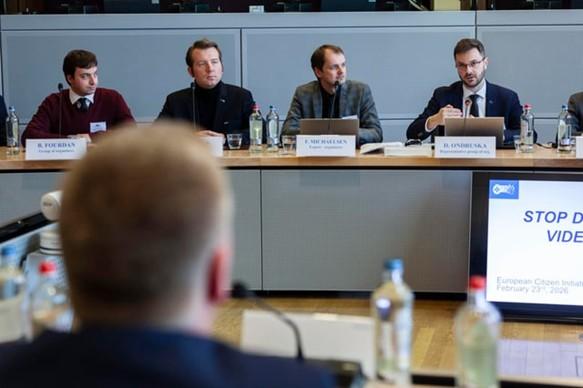
The ECI ‘Stop Destroying Videogames’, which campaigns for the EU to ensure videogame developers provide ways for games to remain playable after server shutdowns, closed collection with over 1.3 million signatures in July 2025. The organiser’s day-to-day has looked very different since.
This has involved discussions with the European Commission and the European Parliament, including a Parliament hearing scheduled for 16 April 2026.

The organisers say that policymakers are willing to listen, but:
‘This phase is less visible but more demanding,’ says Zálešák. ‘We have been preparing for te legal stage for some time, but building trust and relationships within the Parliament takes time and requires very focused, deliberate effort.’
Read: “How the ‘Stop Destroying Videogames’ ECI went viral — and what you can learn from it”
In the case of ‘Stop Destroying Videogames’, the negotiations with policymakers involve finding the balance between meeting consumer needs while not opposing the industry which produces the games. All this needs to be communicated to the Commission, which is working to provide a response to this ECI by July 2026.
Zálešák’s advice for fellow organisers is to prepare early for this second phase, both legally and strategically. ‘Reaching one million signatures is not the end, but the beginning of a more complex phase,’ he says. ‘The pace was slower during the collection phase, but the stakes are now higher, as this is where real policy impact begins to take shape.’
How to prepare for the Commission response
The European Commission must respond to each successful ECI within six months of its formal submission. The submission can take place after signature collection and positive verification by Member States.
See Timeline of European Citizens' Initiative - all steps
But even a positive response does not automatically lead to the desired policy changes, and organisers should be prepared for a sustained and longer-term effort to achieve impact.
When the ECI ‘End the Cage Age’ triumphed collecting 1.4 million signatures in 2019, all signs were pointing to a successful outcome of their demand to end the use of cages in EU farming. The European Parliament backed the cause in 2021, and the European Commission committed to propose a phase-out of the use of cages in farming.
Scroll down this page to watch Olga Kikou share tips on collecting signatures for your initiative
But in 2026, the proposals, first due in 2023, have still not seen the light of day. The organisers keep waiting, with hopes for progress this year. ‘We have been told that there will be a proposal strengthening animal welfare by the end of this year and we have been waiting for this,’ says Olga Kikou, one of the organisers. But she acknowledges that more tough battles may lie ahead as turbulent global times bring increasing uncertainty.
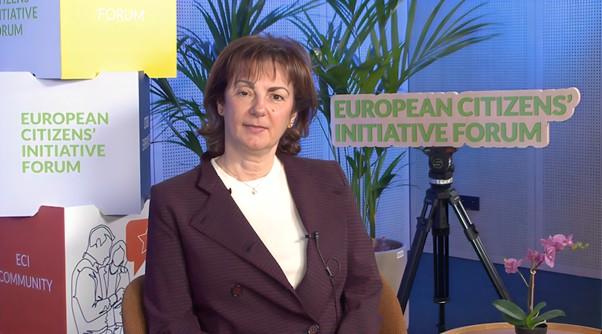
The good news is that while waiting for a response, organisers may use their expertise to advance other causes. While waiting for action on the ‘End the Age Cage’ initiative, Kikou has already joined forces with more than 250 organisations to launch the ECI ‘Good Food for All’, which campaigns for the EU to guarantee the highest standards of food quality.
Even without delays, an ECI can take a long time to bear fruit.
Nika Kovač, the founding director of the Research Institute of 8th March, started preparing the ECI ‘My Voice, My Choice’ three years ago to campaign for the EU to set up a fund to improve Europeans’ access to abortion. Plenty of organisers immediately signed up to the cause and it took them about one year to make the proposal and launch a campaign in April 2024.
Read "Building momentum: the funding and strategy behind the 'My Voice, My Choice' initiative"
Once the campaign secured the required signatures in 2025, the organisers entered a phase of working with the European Parliament and the European Commission to get an institutional response, which took another year.
‘Overall, it's three years, so of course, it's a lot of effort,’ Matteo Cadeddu, one of the campaign team, told the ECI Forum.
What happens when the path to impact changes
Once the ECI graduates from a public endeavour to a potential policy, it may start evolving in unexpected ways. Organisers should be prepared for partial positive answers or an alternative approach to the issue by the policymakers.
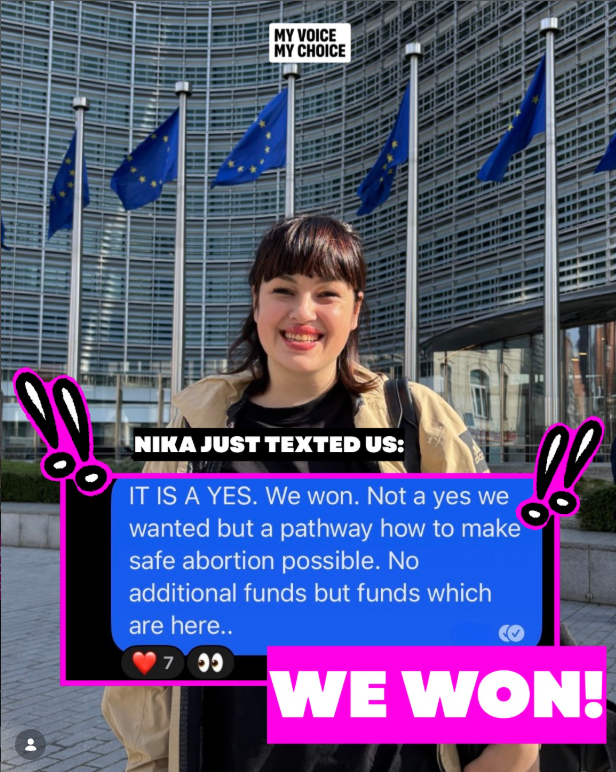
For ‘My Voice, My Choice’, the goal was to get the EU to ensure that anyone can access abortion, which currently varies by country. The EU cannot propose legislation on health, and that is why the organisers asked for a dedicated fund to allow citizens to gain access to abortion in Member States where access is not restricted.
What the Commission promised to deliver in its response to the ECI in February 2026 is different: it confirmed that Member States can use the European Social Fund Plus - the EU’s financial instrument which helps countries invest in social cohesion - to fund access to abortion (including travel).
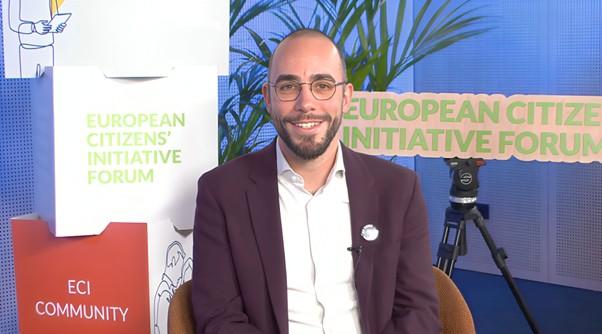
‘It's not exactly what we asked, but actually this opens the path for getting this right to be respected across the European Union,’ said Cadeddu.
Now, the next step for the organisers is getting Member States to commit their EU funding to the cause. This is again another type of campaigning that the organisers will have to pursue.
‘We need to make sure that this fund has enough financing, and at the same time we will need to campaign the different European countries to make sure that they are using it for increasing access to safe abortion,’ said Cadeddu. In a positive sign for the campaign, he added that some countries have already shown interest in committing funds.
The key lesson?
Organisers need to learn how to navigate and negotiate the world of politics in the post-collection phase of their campaigns. This will require patience and flexibility. Kikou says priorities of the day rule politics, and it all depends on will: ‘If there is political will, we will see the light at the end of the tunnel.’
In summary, reaching one million signatures is a major milestone—but it is only the beginning of the institutional phase of a European citizens’ initiative.
Understanding how EU institutions respond, how to engage policymakers, and how to translate support into action is essential for achieving real impact.
Get advice from experts on your initiative
Join the discussion with other organisers

Contributors
Goda NaujokaitytėGoda Naujokaitytė is a freelance journalist specialising in European policy and writes about the European citizens’ initiative for ProMedia. Her work is informed by her experience in Brussels, both inside and outside the EU institutions, as well as time spent living in various European countries. She covers primarily EU digital, green and competitiveness policy, as well as research and innovation in the European Union.
The opinions expressed on the ECI Forum reflect solely the point of view of their authors and can in no way be taken to reflect the position of the European Commission or of the European Union.

Leave a comment