
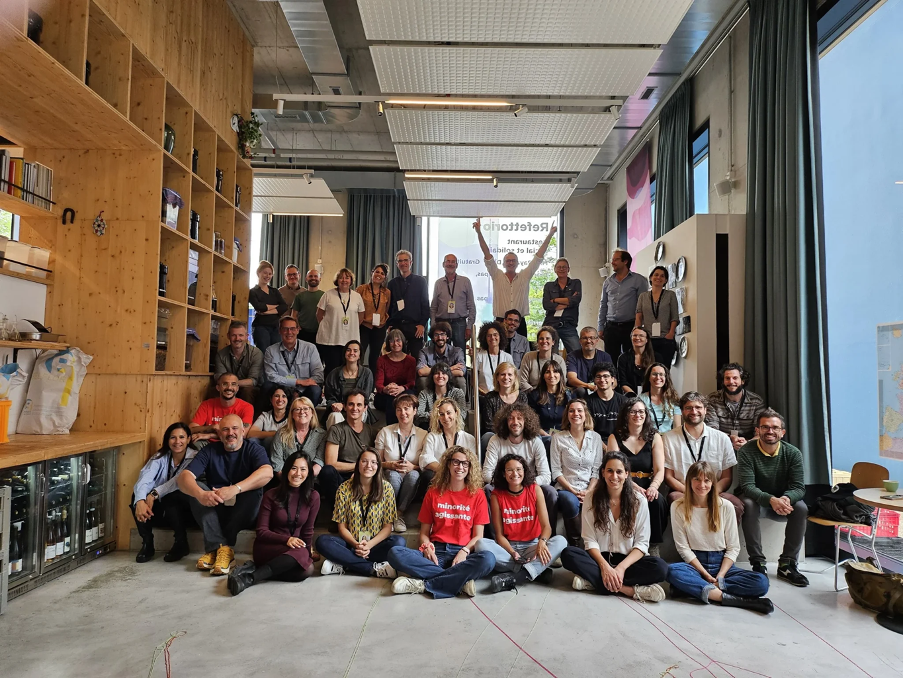
When Good Food For All opened its signature collection this January, its organisers were not just launching another European citizens’ Initiative — they were activating a coalition of more than 275 organisations active in farming, environmental protection and animal welfare.
For ECI organisers, the initiative offers a clear lesson: broad, cross-sector alliances are not a “nice to have”, but a strategic necessity when policy momentum is fragile and political conditions are unpredictable.

“We see a lot of the times that ECIs are single-issue focused. This is a different case. This one brings together farmer groups, environmental groups, animal welfare groups,” says Olga Kikou, the initiative’s Representative. “This is what gives it value and what makes it more unique.”
On paper, the ECI’s goal is simple: the EU should guarantee every citizen the highest standards of food quality. But food supply is a vital and complex process involving many actors and sectors, plagued with issues, from the sustainability of industrial farming to inhumane treatment of animals. The goal is broad (the full name of the Initiative is ‘Food is a Human Right for All! Guaranteeing healthy, just and sustainable food systems’), but the ECI’s policy demand list is concrete.
Its many asks include new or amended EU legal acts that would guarantee fair food systems and democratic governance, support for small-scale food producers, combat the concentration of land across the EU, promote the consumption of fruit and vegetables, set rules for sustainable food procurement and strengthen animal welfare. (See the full list here)
The variety of demands “reflects the fact that food is a complex issue and it's not just a single sector that can address all these challenges,” says Kikou.
Moving ahead despite political uncertainty
Political discussions on the universal right to food have been happening for a while, with the United Nations even appointing a rapporteur for the topic. But the activists behind the ECI thought it was time to bring them into a more practical level and chose the EU’s ECI to do so.
Kikou, who is the founder of the non-profit organisation Animal Advocacy & Food Transition, already had plenty of experience running ECIs, including End the Cage Age, which had successfully gathered more than 1.4 million signatures.
She knew how ECIs could help gather momentum and push through a message to policymakers. End the Cage Age had secured the European Commission’s commitment to put forward a legislative proposal to ban cages for a number of farm animals in 2023. This was a huge success for the ECI.
However, maintaining momentum has been challenging. Although the initiative’s success generated strong expectations, the proposal has not yet progressed and is not referenced in the Commission’s current 2026 work programme. The extended timeframe is testing the patience of organisers and supporters and has sparked debate about how ECIs translate into policy follow-up.
Kikou sees the delays as part of a wider pushback against progressive sustainability policies in an uncertain and increasingly radical political climate.
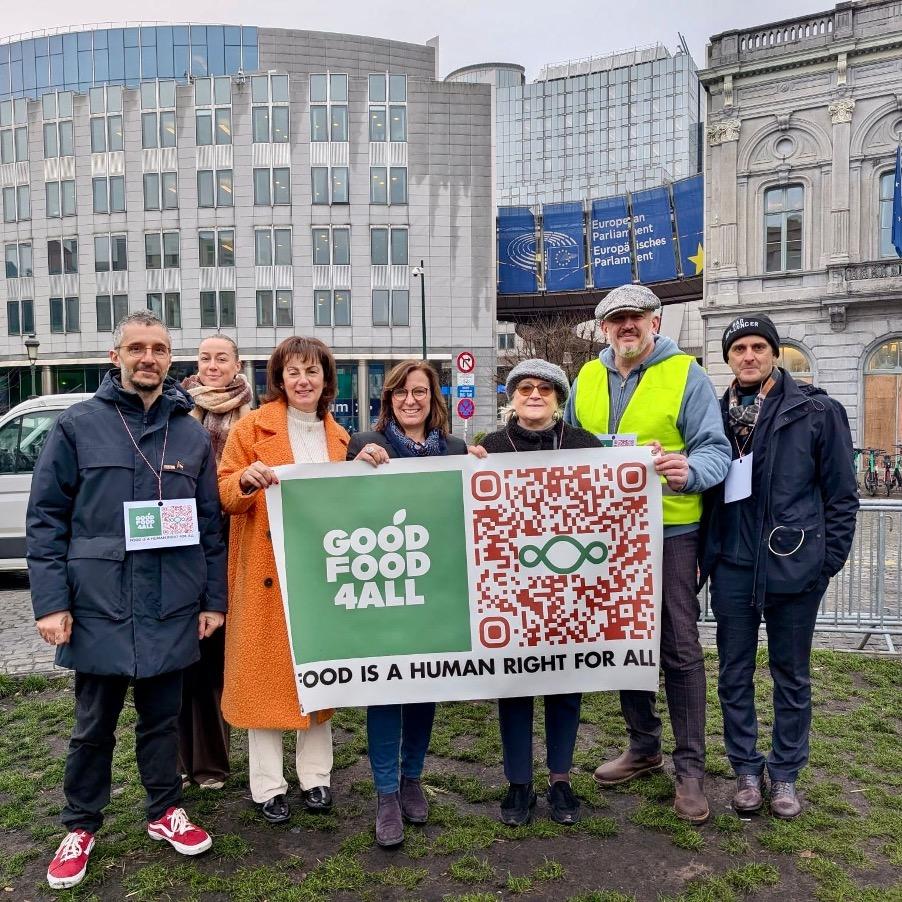
In light of the developments, the organisers of Good Food For All deliberated whether it is still worth pursuing the ECI in the current geopolitical environment. Organising one is a lot of work and the outcome is unpredictable. “You plan per month, week, day, but you never know what is going to influence leaders to make strategic decisions that affect you,” says Kikou. “There is uncertainty which is not the best for campaigning and those who are pushing for some issues. Citizens have turned their eyes elsewhere.”
But they made the decision to move forward and Kikou says she still believes in the power of ECIs as she embarks on the next one as part of huge group of activists.
Her advice? Prep, prep, prep
Good times or bad, gathering 1 million signatures is not an easy job. From experience, Kikou’s main piece of advice is simple: prepare as much as possible.
The new ECI’s plan is to take advantage of its extensive network of organisations around Europe first, with each promoting the ECI in their region and target groups, such as farmers, health advocates, animal welfare groups and consumers. The hope is that the ECI’s broad goal will work in its favour, as every EU citizen is a potential target – food is a universal need, after all.
With time, the organisers’ focus will likely narrow as weaker points in the campaign emerge. Then, they will shift focus to specific countries where signature collection is not gathering enough pace to meet the goals. For now, the organisers expect significant support in big EU countries, such as Germany, which has a good track record in supporting ECIs, and France, where the right to food is currently on the political agenda.
At campaign level, the campaign will focus on a different aspect of the campaign each month, such as farming, the environment and public procurement.
The plans are open and adaptable, but the organisers are prepared for the unexpected, a key lesson Kikou learnt with the ECI End the Cage Age. “There are many variables that need to be addressed before and thought out before you even start, because when you start the clock is ticking and you're not able to manoeuvre so easily or to devote time to think about the strategy,” she says.

Read other interviews with organisers:
Save your right, save your flight: showcasing the use of an ECI for advocacy
Water resilience and clear messaging: An ECI in progress
One million signatures in ten days: how the ECI Ban on conversion practices did it
Contributors
Goda NaujokaitytėGoda Naujokaitytė is a freelance journalist specialising in European policy and writes about the European citizens’ initiative for ProMedia. Her work is informed by her experience in Brussels, both inside and outside the EU institutions, as well as time spent living in various European countries. She covers primarily EU digital, green and competitiveness policy, as well as research and innovation in the European Union.
The opinions expressed on the ECI Forum reflect solely the point of view of their authors and can in no way be taken to reflect the position of the European Commission or of the European Union.

Leave a comment