About the "One of Us" initiative
Registered on 11 May 2012, "One of Us" was among the first European citizens’ initiatives (ECIs) to successfully collect more than one million statements of support.
The initiative called for the legal protection of the dignity, right to life and integrity of every human being from conception. Its central objective was to end EU funding for activities involving human embryos, particularly in the fields of research, public health and development cooperation.
After completing its signature collection campaign, the initiative was formally submitted to the European Commission on 28 February 2014, supported by certificates confirming the validity of 1,721,626 statements of support. As part of the ECI process, the organisers met with representatives of the European Commission on 9 April 2014 and presented their proposal at a public hearing in the European Parliament the following day.
The European Commission adopted its official response on 28 May 2014 through a Communication (see the press release). In its assessment, the Commission noted that EU primary legislation already enshrines respect for human dignity, the right to life and the integrity of the person. It also recalled that all EU expenditure must comply with EU primary legislation under the EU Financial Regulation. On this basis, the Commission concluded that there was no need to propose amendments to the Financial Regulation.
The "One of Us" initiative also stands out as an example of organisers making full use of the ECI framework by submitting a draft legal act that proposed three legislative amendments. In addition, the campaign evolved into a longer-term organisational effort with the creation of the One of Us Federation in September 2013, an organisation with its own legal personality established to support and continue the initiative's work.
Registered
11/05/2012
Collection start date
11/05/2012
Collection closed *
01/11/2013
* New deadline set as a response to issues faced by the organisers during the start-up phase of the citizens' initiative.
Valid initiative
28/02/2014
Answered initiative
28/05/2014
What helped this initiative achieve a successful collection of signatures?
The campaign was built on a network of national committees across Europe, each responsible for adapting outreach and mobilisation efforts to its own national context. This decentralised structure allowed organisers to combine a common European message with locally tailored campaigns.
The organisers focused significant efforts on countries with well-established pro-life movements, including France, Germany, Italy, Poland and Spain. Existing organisational capacity, active civil society networks and public awareness of the issue helped generate large numbers of signatures and enabled the initiative to exceed the minimum threshold in eighteen Member States.
Public support from influential religious and civil society actors, including the Vatican, helped raise the visibility of the initiative and mobilise supporters across Europe. National ambassadors and partner organisations further amplified the campaign's message and encouraged citizens to participate.
The organisers established a series of progressively ambitious goals, from reaching national thresholds in seven countries to collecting well beyond one million signatures. This structured approach helped maintain momentum throughout the campaign and provided a buffer against potential losses during the verification process.
The strategy behind the initiative
Preparation
The foundations of the "One of Us" campaign were laid through cooperation between NGOs from countries with well-established pro-life movements, including France, Germany, Poland, Spain and Italy. These organisations reached out to like-minded groups across Europe and encouraged them to establish national committees capable of managing the campaign at national level.
To support coordination across the EU, partner organisations contributed funding for a central campaign structure based in Brussels, covering activities such as meetings, travel and overall campaign management. At the same time, each national committee was responsible for raising the resources needed to run its own activities and outreach efforts.
Fundraising and resources
The "One of Us" initiative received financial support from three sponsors, amounting to a total of €159,219.
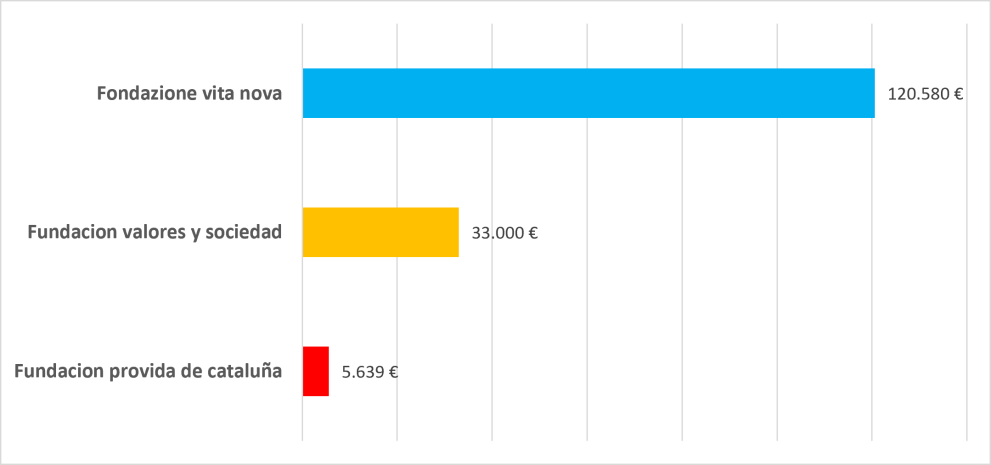
Note: Further information on "One of Us" support and funding is available on the "One Of Us" initiative page in the ECI Register. Only contributions above €500 per sponsor are required to be reported
Campaign strategy
The campaign began immediately after the initiative was registered.
Today, organisers can choose a start date within six months of registration before the 12-month collection period begins. When "One of Us" was launched, this flexibility did not yet exist.
The organisers devoted the first five months primarily to building the structures needed to operate across all EU Member States. As they later explained, this period was largely dedicated to creating the organisational framework required to support the campaign. Only once this network was in place did the initiative move into full-scale signature collection. As a result, the vast majority of signatures were collected during the final six months of the extended 18-month collection period.
To raise awareness and inform citizens about the initiative, the organisers adopted a broad communication strategy that combined traditional and digital channels. They created a dedicated website, engaged with the press through interviews and media outreach, and maintained an active presence on social media platforms such as Facebook and Twitter. This multi-channel approach helped extend the campaign's reach across national borders and connect supporters throughout Europe.
Signature collection and verification process
A common European strategy provided the overall direction for the campaign, while allowing each national committee to adapt its activities to local circumstances. National committees were encouraged to identify ambassadors who could promote the initiative, increase visibility and motivate citizens to sign statements of support.
The organisers structured their campaign around a series of increasingly ambitious milestones:
- Reach the minimum signature threshold in seven Member States.
- Collect one million signatures.
- Reach 1.2 million signatures to account for possible invalidations during verification.
- Reach 1.5 million signatures to reinforce the political message of the initiative.
- Collect as many signatures as possible from the widest possible range of countries.
This step-by-step approach helped maintain momentum and provided clear objectives throughout the collection period.
Number of statements of support collected by One of Us per Member State
The initiative was formally submitted on 28 February 2014, accompanied by certificates confirming the validity of 1,721,626 statements of support. In total, "One of Us" exceeded the required national threshold in eighteen Member States, far surpassing the minimum requirement set out in the ECI Regulation.
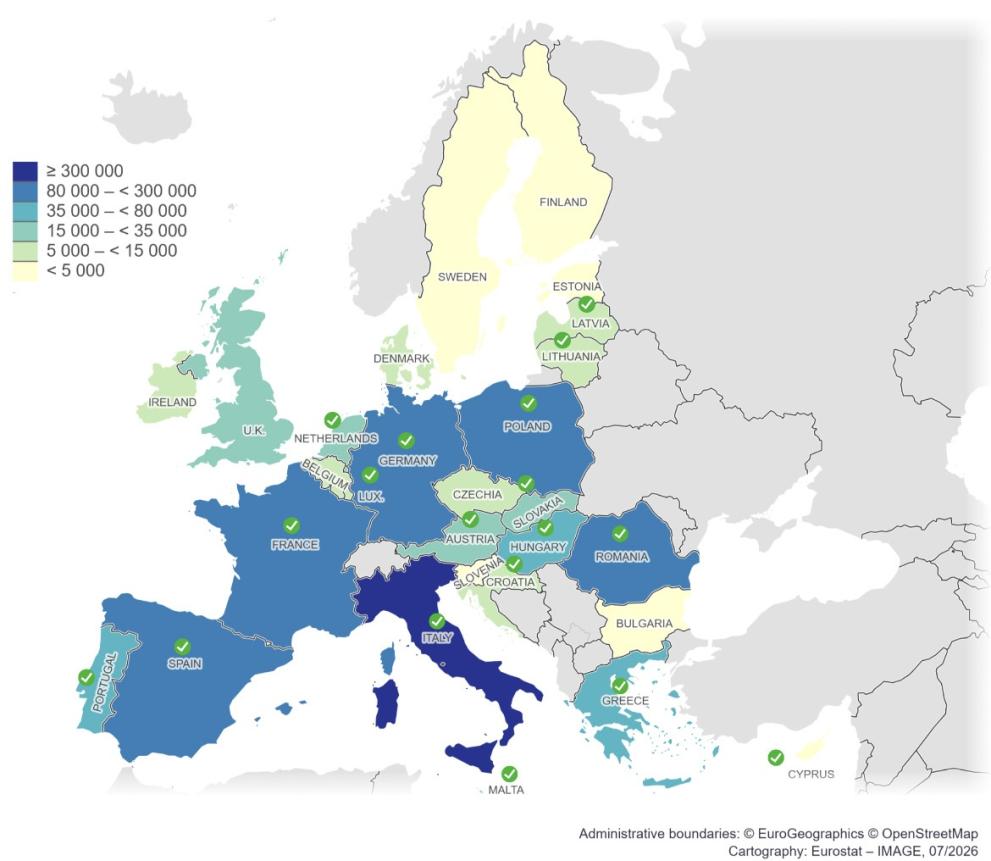
The full table with statements of support is available on the dedicated Commission's webpage.
One of the most significant challenges faced by the organisers was the technical complexity of establishing the online collection system. To address these difficulties during the early years of the ECI instrument, the European Commission provided hosting services for organisers' online collection systems beyond its obligations under the Regulation, as well as technical assistance and training.
As of 1 January 2023, the Central Online Collection System set up by the European Commission is the only system that organisers can use to collect signatures online.
The Commission also introduced exceptional measures for initiatives registered before 31 October 2012, allowing statements of support collected until 1 November 2013 to be counted, extending the collection period beyond the standard 12 months.
When the collection phase concluded on 1 November 2013, approximately 65% of all statements of support had been gathered on paper by volunteers, while the remaining 35% had been collected online. The result demonstrated the importance of strong grassroots mobilisation on the ground for this topic.
The impact of this initiative
Formal submission and meetings with the Commission
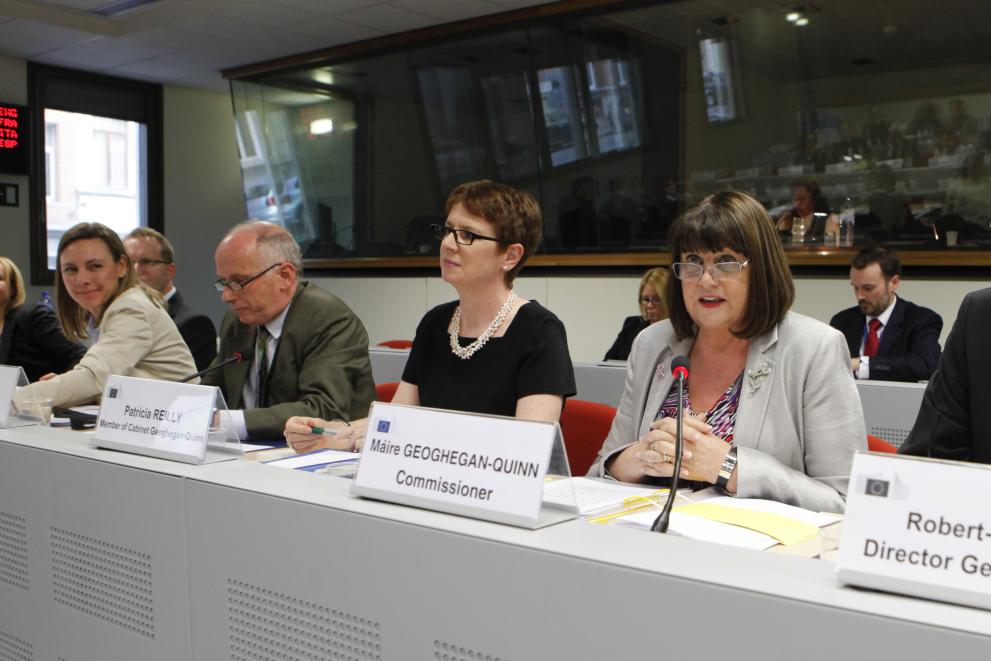
Máire Geoghegan-Quinn, Commissioner for Research, Innovation and Science, met with the organisers from the "One of Us" Citizens' Initiative, before their hearing before the European Parliament on 9 April 2014 (see press release). Grégor Puppinck, Director-General of the European Centre for Law and Justice (ECLJ) and President of the European Committee of the Citizens' Initiative "One of Us", chaired the delegation.


European Parliament public hearing
The organisers presented their initiative at a public hearing at the European Parliament on 10 April 2014.

Organisers at the public hearing at the European Parliament. Source: Facebook group “ONE OF US”
European Commission's formal response
On 28 May 2014, the European Commission adopted its formal response to the initiative through a Communication (see press release). After assessing the organisers' proposal, the Commission concluded that it would not submit a legislative proposal. It noted that the relevant funding framework had recently been debated and agreed by both the Member States and the European Parliament, and therefore did not consider further legislative changes necessary.
Legislative impact and follow up
Although the Commission decided not to propose new legislation, the organisers remained committed to maintaining the momentum generated by the campaign. Throughout the process, they kept supporters informed primarily through email communications, sharing detailed reports on signature collection across Europe. Successes achieved in one country were highlighted to encourage and motivate campaigners elsewhere. As more countries reached their national thresholds, these achievements were used to mobilise remaining national campaigns and sustain engagement across the network.
For the organisers, the European Citizens’ Initiative was never intended to be a one-off effort. Instead, it became the foundation for longer-term cooperation among organisations and supporters who shared common objectives. Building on the relationships and networks created during the campaign, they established the One of Us Federation, which continued its activities at both European and national level.
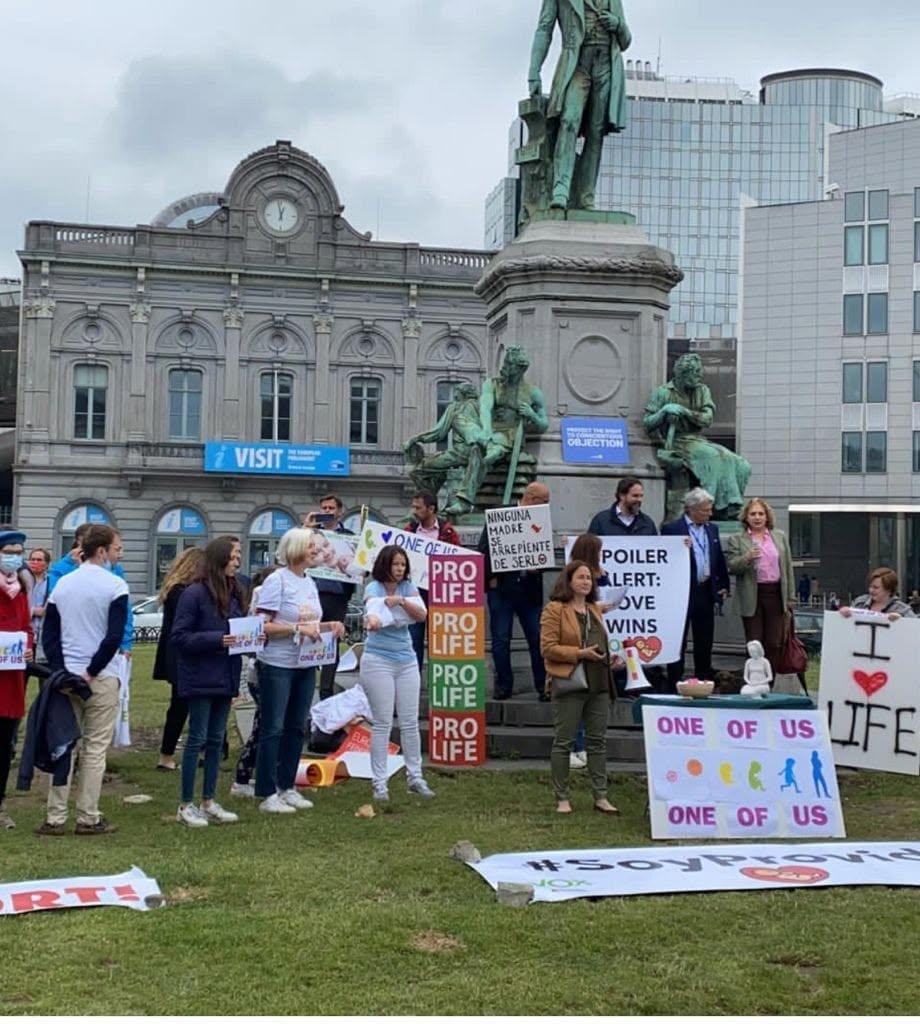
Demonstration of the "One of Us" Movement in front of the European Parliament in Brussels against the adoption of the Matic report in June 2021. Source: Facebook group “ONE OF US”
The experience illustrates how a European citizens’ initiative can have an impact beyond the immediate legislative process. In addition to giving citizens an opportunity to raise an issue at EU level, it can help build lasting networks, strengthen cooperation across borders and bring together individuals and organisations around a shared long-term goal.
Reflecting on the campaign, the organisers identified one area where they would adopt a different approach in the future: organisational preparation. In particular, they emphasised the importance of having a stronger and more established structure in each participating country from the outset. In their view, a more solid organisational foundation would have allowed more time to focus on collecting signatures and supported even more effective long-term planning. More information on the follow-up actions can be found in the European Citizens’ Initiative website.
Hints and tips for future organisers
Strong national coordinators and trusted partner organisations will give your campaign the structure and momentum needed to mobilise supporters across Europe.
Regular updates on progress help maintain enthusiasm, strengthen teamwork, and encourage national campaigns to learn from each other's successes.
Use the campaign to build lasting networks and partnerships that can continue advancing your cause long after the collection phase ends.
Even when legislative change is uncertain, a successful initiative can spark debate, raise awareness and build a powerful movement across Europe.
Additional information
Additional information regarding "One of Us" is available on the organisers' website and the dedicated Commission's webpage.
The opinions expressed on the ECI Forum reflect solely the point of view of their authors and can in no way be taken to reflect the position of the European Commission or of the European Union.