About the Right2Water initiative
The "Right2Water" initiative (full name: “Water and sanitation are a human right! Water is a public good, not a commodity!”) was registered on 10 May 2012 and became the first European citizens’ initiative (ECI) to successfully collect more than one million signatures.
The initiative called on the European Commission to propose legislation implementing the human right to water and sanitation, as recognised by the United Nations, and to ensure that these essential services are provided for all as public services. At the heart of the campaign was the conviction that access to clean drinking water and sanitation is a fundamental right that should be guaranteed to every person
The initiative was formally submitted to the European Commission on 20 December 2013, accompanied by certificates confirming the validity of 1,659,543 statements of support. As part of the ECI process, the organisers met representatives of the European Commission on 17 February 2014 and presented their case at a public hearing in the European Parliament the very same day.
The Commission issued its official response in a Communication within three months (as required by the first ECI Regulation), on 19 March 2014 (see the press release). In its reply, the Commission committed to taking action in several areas related to the initiative, including increasing transparency and stimulating innovation. It also proposed a revision of the Drinking Water Directive, introducing an obligation for Member States to improve access to drinking water, particularly for the most vulnerable groups.
As the first successful European citizens’ initiative, "Right2Water" demonstrated the potential of participatory democracy at EU level. It showed how citizens from across Europe can come together around a shared concern, influence the European agenda, and contribute to policy developments with a lasting impact.
Registered
10/05/2012
Collection start date
10/05/2012
Collection closed
01/11/2013*
* New deadline set as a response to issues faced by the organisers during the start-up phase of the citizens' initiative.
Valid initiative
20/12/2013
Answered initiative
19/03/2014
What helped this initiative achieve a successful collection of signatures?
The success of "Right2Water" was largely driven by the fact that it relied on an already well-established international movement. Organisers mobilised existing trade union structures, NGOs, social movements and local networks across Europe, allowing the campaign to quickly reach a broad audience and secure support in many EU countries.
The close cooperation between the European organisers and national campaign teams was crucial. While the campaign maintained a common European message, national coordinators adapted slogans, communication styles and outreach strategies to local contexts, making the initiative more relatable to citizens.
The campaign benefited from careful long-term planning. Preparations began a few years before the official launch, including fundraising, alliance-building and the development of campaign messages. This early investment ensured that organisers had the necessary resources, expertise and partnerships in place once the collection period started.
The organisers successfully combined social media outreach with traditional media coverage to raise awareness and mobilise supporters. Television programmes, newspaper articles and online campaigns all contributed to increasing public visibility, while local offline activities and activist networks helped maintain engagement on the ground across Europe.
The strategy behind the initiative
Preparation
The origins of the "Right2Water" campaign date back to 2009, when the European Federation of Public Service Unions (EPSU) decided to make use of the new European citizens’ initiative instrument. For the organisers, the ECI offered a unique opportunity to build a campaign with a truly European dimension and to foster collaboration across borders.
This long-term vision proved crucial to the initiative’s success. Three years before the initiative was officially registered, EPSU had already established a dedicated fund to support the campaign and began building a broad coalition of partners. The alliance brought together development organisations, social and environmental NGOs, women’s organisations, churches, public water companies and municipalities, all united behind a common goal.
As one organiser explained that all partners had different reasons to support the initiative, but shared a common interest: its success.
To build support across Europe, organisers relied on personal contacts, EPSU members, social movements, national networks and European organisations such as the European Environmental Bureau, Women in Europe, Social Platform and the European Water Movement. This extensive network helped raise awareness and mobilise supporters in different countries and communities.
Careful planning was another important ingredient. Organisers invested significant effort in developing clear campaign messages and preparing a strategy well in advance. One national campaign coordinator highlighted how important it was to select campaign ambassadors carefully, and to ensure that sufficient time, resources and expertise are available to manage both policy-related issues and technical aspects of the campaign.
The organisers also sought legal expertise during the preparation phase. Retired lawyers were consulted to assist with drafting the initiative and ensuring that its objectives were formulated effectively.
Do you have doubts about the legal requirements of your initiative? Request expert advice through the “Ask an Expert” service or consult this webinar on the legal requirements to launch an ECI.
Fundraising and resources
The "Right2Water" initiative received financial support from a single sponsor: the European Federation of Public Service Unions (EPSU), a trade union federation representing public service workers across Europe. EPSU contributed EUR 140,000 to support the campaign.

Implementation
To carry out the campaign, organisers combined social media outreach with more traditional communication channels. While a range of channels were used, organisers identified Facebook groups and events as particularly effective tools for mobilising supporters. Although Facebook has since shifted its focus from events towards pages, organisers noted that events remained valuable because people who expressed interest continued to receive notifications and updates.
One of the most significant moments of the campaign came when a sketch on a German prime-time TV show commented on the Initiative. The broadcast triggered a dramatic increase in support, generating approximately 200,000 additional signatures. Organisers attempted to reproduce this success in other countries, but found the process time-consuming and were unable to attract the same level of attention from national media outlets.
Offline campaigning also played an important role. Activists promoted the initiative in cities and workplaces across the EU, helping to reach audiences beyond digital channels. Organisers established a network of local contact points where campaigners could share experiences and report on their activities. This exchange of ideas encouraged learning between different groups and strengthened the campaign as a whole.

Demonstration on May 14, 2013 at Berlin's Alexanderplatz. Source: Europäische Bürgerinitiative (EBI) "Wasser ist ein Menschenrecht" - Neue Zahlen vom 13. Mai 2013 - Berliner WassertischBerliner Wassertisch
A key factor behind the initiative’s success was the close interaction between European-level coordination and national campaigns. According to the organisers, “the entire campaign was designed [in a way that provided the opportunity for] the European coordination to exchange with the national partners.”
At the same time, organisers recognised the importance of adapting campaign messages to national contexts. One national coordinator explained how the slogan “Water is a Human Right” was slightly modified in Finland to “Water is a Basic Right” (Vesi on perusoikeus), a formulation that resonated more strongly because it reflected terminology commonly used in relation to the Finnish Constitution. This experience demonstrated that while European coordination is essential, flexibility and sensitivity to national circumstances can significantly strengthen a campaign.
Cooperation also extended directly between national partners. These exchanges helped campaigns learn from one another and expand their networks. According to the organisers, “the success of the collection in several countries is explained by the expansion of the numbers of national partners.”
The organisers also believe that the universal relevance of the initiative’s objective contributed significantly to its success. As they observed, “water is something that all people need in everyday life, and nothing in our society could function without water.” Because access to water affects everyone, people from very different backgrounds were able to identify with the campaign’s goals and support the initiative.
Signature collection and verification process
According to the organisers, public awareness of the importance of access to clean water played a significant role in the success of the signature collection campaign. The issue resonated strongly with citizens across Europe, helping the initiative gain momentum from the outset.
Support proved particularly strong in Italy, Spain and Greece, where the initiative exceeded their initial targets. These countries had experienced some of the most far-reaching austerity measures at the time, including policies linked to the privatisation of basic public services. As a result, the initiative's message found a receptive audience among citizens concerned about access to essential services.
The organisers continuously monitored the progress of the campaign and adapted their strategy as the collection period unfolded. Six months after the launch of signature collection, they were able to identify the countries where support was growing most rapidly and concentrated additional efforts in those areas. Once the required threshold had been reached in a Member State, the campaign continued collecting signatures with the aim of exceeding the threshold by at least 5%, providing a buffer for the verification process.
The formal 12-month collection period for the initiative ended on 10 May 2013. However, the Commission has accepted statements in support of the initiative up until 1 November 2013, due to the difficulties that most organisers experienced as regards the setting-up of their online collection systems during the start-up phase of the ECI. By the end of the collection phase, 84% of the 1.7 million signatures were collected online and16 % on paper.
Number of statements of support collected by Right2Water per Member State
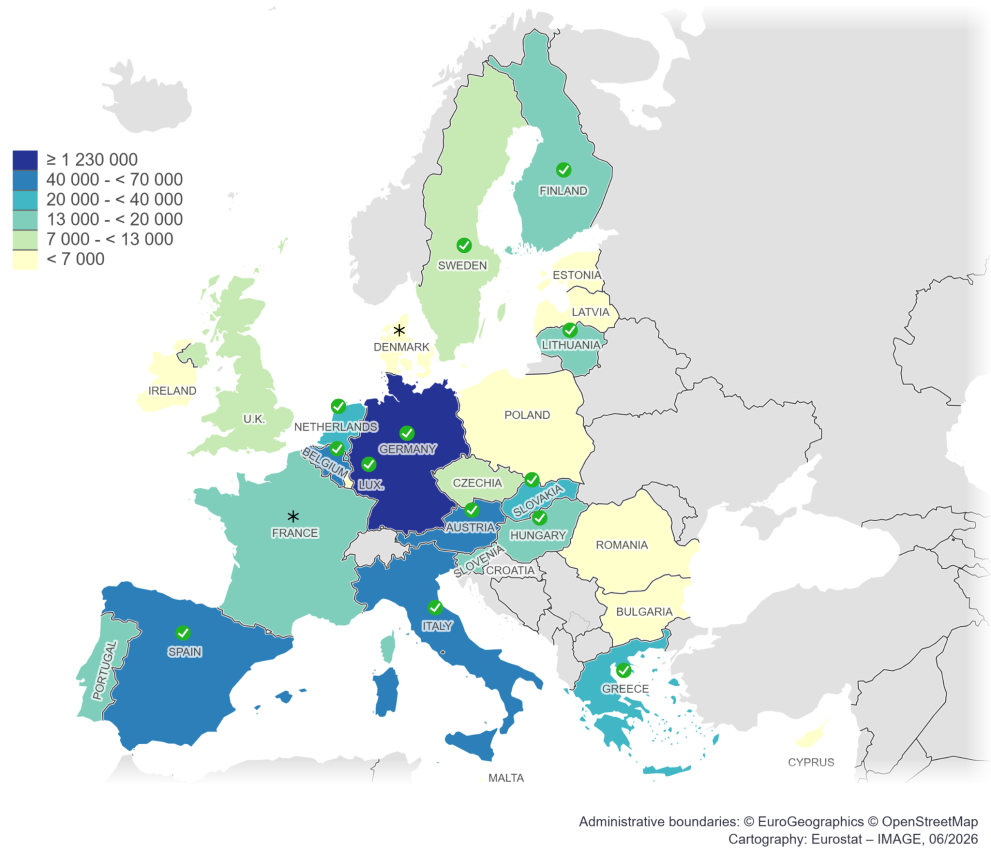
The check marks on the map indicate the EU countries where the minimum thresholds of signatures required for supporting the initiative were successfully met. With a total number of 1 659 543 verified statements, the “Right2Water” initiative reached the minimum thresholds in thirteen Member States.
The asterisks on the map indicate the EU countries where the certificates of the statements of support were received after the time of submission of the initiative for Commission’s examination. These figures are not included in the total number of signatories. The full table with statements of support is available on the dedicated page on the ECI Website.
The impact of this initiative
Formal submission and meetings with the Commission
The meeting with the Commission, represented by Vice-President in charge of Interinstitutional Relations and Administration, Maroš Šefčovič, took place on 17 February 2014.

European Parliament public hearing
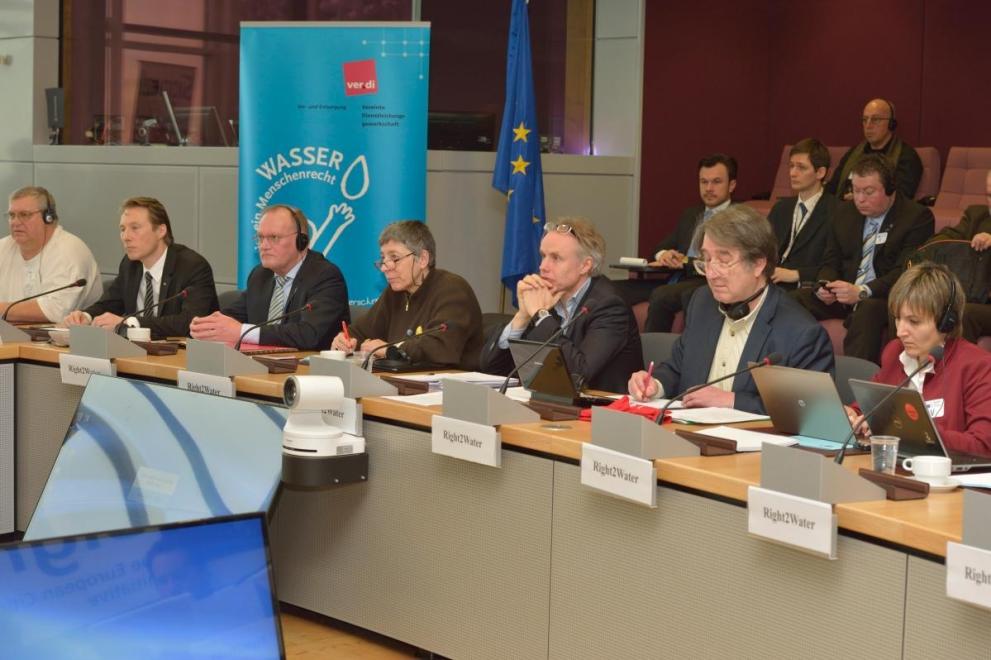
In the afternoon of 17 February 2014, following their meeting with the European Commission, the organisers presented the "Right2Water initiative" at a public hearing at the European Parliament (see the press release). The hearing was organised by the Committee on Environment, Public Health and Food Safety (ENVI), in association with the Committee on Petitions, the Committee on Development and the Committee on Internal Market and Consumer Protection. Commission Vice-President Šefčovič attended the hearing as well.
For the organisers, the hearing represented an opportunity to engage directly with Members of the European Parliament (MEPs) and the European Commission on how the objectives of the initiative could be achieved. As they later reflected, they had expected the hearing to provide a platform for a substantive discussion on the initiative's proposals. However, in their view, this objective was only partially achieved. While several MEPs intervened during the hearing, the organisers felt that there was limited debate on the initiative itself. As they noted, “there were some interventions by MEPs but no debate surrounding the initiative".
European Commission's formal response
In its Communication of 19 March 2014, the European Commission set out a series of actions it committed to undertake in response to the Right2Water initiative (see press release).
A central element of the Commission’s response was a commitment to strengthen the implementation of existing EU water quality legislation and to improve access to safe drinking water throughout the European Union. To support these objectives, the Commission announced an EU-wide public consultation on the Drinking Water Directive to identify ways of enhancing citizens’ access to high-quality drinking water.
The Commission also committed to increasing transparency in the water sector. Planned actions included improving the management of drinking water and wastewater data, exploring the development of water quality benchmarks and promoting more structured dialogue among stakeholders.
In addition, the Communication highlighted the importance of supporting cooperation and innovation in water services and development assistance. This included encouraging partnerships between water operators, facilitating the exchange of best practices among Member States and identifying new opportunities for collaboration.
At the international level, the Commission reaffirmed its commitment to promoting universal access to safe drinking water and sanitation through EU development policy and through its advocacy in the context of the United Nations Sustainable Development Goals.
Advocacy beyond the signature collection period
Following the completion of the signature collection campaign, the organisers continued their efforts to communicate the initiative’s results and maintain engagement among supporters. To disseminate updates and information, the Right2Water initiative relied on its news bulletin, which was used throughout the campaign. Even before the end of the initiative, organisers regularly distributed updates in different languages to supporters across participating countries.
One of the most significant outcomes of the campaign was the creation of a lasting European network. The relationships and partnerships established during the initiative continued well beyond the formal conclusion of the ECI process. According to the organisers, building a long-term network had been one of the objectives from the very beginning: “one of the ideas when the ECI was launched.” Their experience demonstrates that the impact of a European citizens’ initiative can extend far beyond the collection of signatures and the Commission’s response. An ECI can also serve as a catalyst for durable partnerships, alliances and continued cooperation among organisations sharing common goals.
Reflecting on the campaign, the organisers identified the national dimension as one of the most important factors for success. In their view, the design and implementation of strong national campaigns were crucial to achieving the initiative’s objectives. They emphasised that “the work of coalition building at national level” is extremely important, highlighting the value of investing in local partnerships and support networks from the earliest stages of a campaign.
More information on the follow-up actions can be found on the European citizens’ initiative website.
Legislative impact and follow-up
The "Right2Water initiative" was followed by a number of legislative developments aimed at strengthening access to safe drinking water across the European Union.
On 1 February 2018, the Commission adopted a proposal for the revision of the Directive on drinking water, including measures requiring Member States to improve access to drinking water, particularly for vulnerable and marginalised groups. On 16 December 2020, the European Parliament formally adopted the revised Drinking Water Directive. It entered into force on 12 January 2021. Member States had until 12 January 2023 to transpose the directive into national legislation.
Other developments included a proposal for a Regulation on minimum requirements for water reuse, adopted in May 2018, and new minimum hygiene standards for materials and products in contact with drinking water, adopted in January 2024.
These are some of the legislative developments that followed the Right2Water initiative. Further information on EU rules on drinking water is available on the dedicated European Commission website.
Hints and tips for future organisers
Strong campaigns are rarely built alone. Existing alliances, trade unions, NGOs and grassroots movements can provide the supporters, expertise and credibility needed to mobilise quickly across Europe.
A shared European message creates unity, but national campaigns need flexibility to resonate with citizens. Adapting slogans, language and outreach strategies to local realities can make a major difference.
Successful ECIs do not start on registration day. Invest early in coalition-building, fundraising, campaign planning and message development to ensure your initiative is ready to gain momentum from day one.
Combine social media, traditional media and grassroots campaigning to maximise visibility. Online outreach creates momentum, while local events and activists help turn public interest into signatures.
Regular exchanges between national organisers strengthen coordination and encourage the sharing of ideas and good practices. Collaboration across borders can help campaigns grow faster and remain dynamic over time.
Additional information
Additional information regarding "Right2Water" is available on the organisers' website and the dedicated Commission's webpage.

The opinions expressed on the ECI Forum reflect solely the point of view of their authors and can in no way be taken to reflect the position of the European Commission or of the European Union.