The European Citizens' Initiative: basic facts
Since 2012, the European Citizens’ Initiative (ECI) has been a way for EU citizens to set the EU’s agenda. It allows EU citizens to shape proposals on issues that matter to them and that are in the area of competence of the EU.
A group of 7 EU citizens from 7 different EU countries can propose EU policies through an ECI. Once the initiative is registered, other EU citizens can sign the initiative online, via the dedicated online collection system, or on paper.
If the initiative collects 1 million valid signatures of citizens of at least 7 EU countries, the European Commission must look into it and decide how to follow up on the initiative.

Why is the ECI an effective tool for your cause?
A. The ECI enables you to influence EU policy making:
The ECI is a democratic instrument that enables European citizens to place issues important to them on the EU’s agenda. It is the first transnational instrument of participatory democracy of its kind and represents a vital bridge between citizens and EU institutions. Previous successful initiatives have already left their mark on EU laws and legislation, for instance:
Launched in 2012, this was the first-ever ECI to gather over one million signatures and to be formally recognised by the European Commission. The initiative sought to ensure that access to drinking water and sanitation is guaranteed for all in the EU, and to prevent the liberalisation of water services. In response to public pressure and political mobilisation around this ECI, the Commission acknowledged the need for action.
As a concrete result, in 2018, the Commission proposed a revision of the EU Drinking Water Directive with a strong emphasis on improving the quality and accessibility of tap water, especially for marginalised and vulnerable groups.
This 2022 initiative was calling for a strengthening of the EU ban on animal testing for cosmetics. It also sought to reform chemical safety regulations, ensuring a secure and sustainable chemicals management framework that does not rely on animal testing.
In 2023, the European Commission proposed to continue applying and enforcing the animal testing ban, while also considering the need for legislative changes to clarify the interface between the Cosmetics Regulation and the REACH Regulation. In addition, it announced plans to publish a roadmap aimed at replacing animal testing in chemical safety assessments by the first quarter of 2026.
This initiative reached 1,119,996 signatories from 27 EU Member States and asked the Commission for an action to end the trade of loose shark fins in the EU including their import, export and transit.
In 2023, the European Commission published its response, committing to begin, as of January 2025, the monitoring of shark product trade by tracking the most traded shark species. Following up on its commitment to develop more detailed EU import and export data to improve statistics on trade in shark products, the Commission created 13 new tariff codes for sharks and their fins. These codes will enable the tracking of the most traded shark species, including the blue shar and the shortfin mako. The codes entered into application in January 2025. Additionally, the Commission has conducted public consultations to gather evidence and carry out an impact assessment on a potential ban on the trade of detached fins to evaluate a range of policy measures.
In the meantime, the EU has committed to enforcing existing regulations and maintaining its leadership in global conservation efforts. This includes promoting the adoption of international shark conservation and management measures and advocating for a worldwide ban on shark finning.
Read more stories about the successful ECIs.
B. The ECI helps organisers raise awareness on a topic:
Launching an ECI does more than gather signatures, it raises your issue on the European stage. From the moment your initiative is registered, you gain visibility on the EU stage and open the door to engagement with EU institutions, media, civil society, and the wider public.
By campaigning across Member States, you set the agenda of the public debate and bring your topic into mainstream EU discussions. Your ECI may even lead to new legislation, but in the meantime, you are given the platform and space to build momentum, mobilise supporters, create a community around your cause, and spark conversations that reach far beyond national context.
Successful campaigns like End the Cage Age and Stop Glyphosate have shown how ECI organisers can shape narratives, influence public opinion, and push institutions to respond. Through the ECI, you have the chance to raise the level of your cause — and to bring others with you in that campaign.
Some of the successful ECIs and their success in Member States
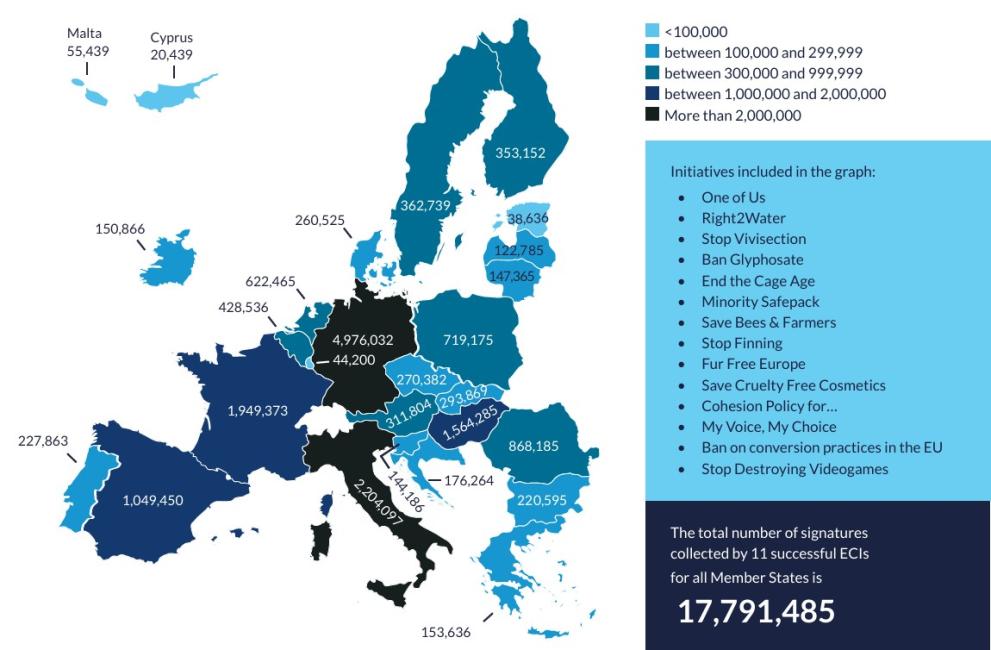
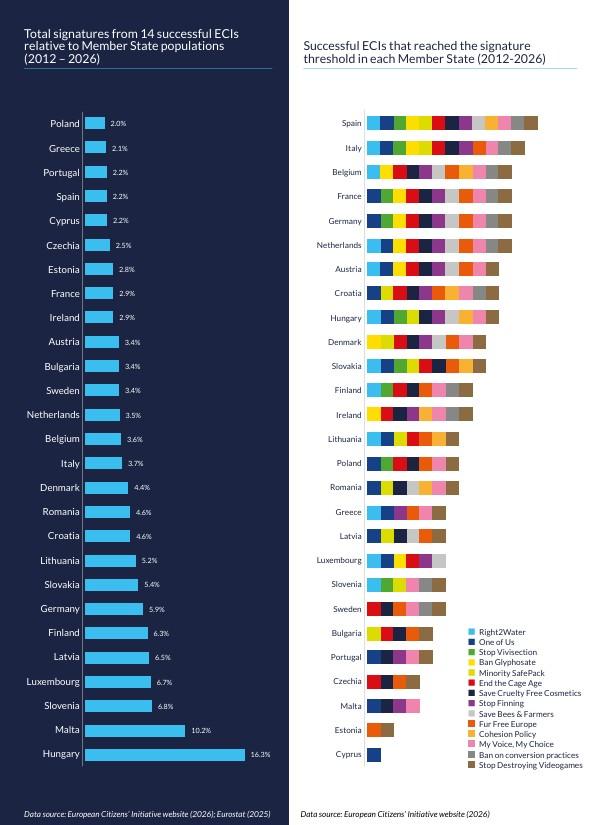
In some Member States, such as Hungary, Malta and Latvia, the ECIs have seen great success. In Spain, Germany and Italy, the ECIs have often reached the signature thresholds. The ECI has helped raise the level of debate on the issues brought forward by these initiatives.
How to launch an ECI
Eligibility
Any EU citizen of the voting age in European elections can launch an ECI. The only two requirements are:
- The initiative has to be launched by 7 EU citizens residing in 7 different EU countries.
- The initiative must focus on a subject that falls within the Commission's powers to submit a proposal for a legal act, and it must not be abusive or contrary to EU values.
An ECI can be submitted in any of the official EU languages.
In some Member States, EU citizens from the age of 16 can sign and launch an ECI. Today, these include Belgium, Germany, Estonia, Malta, Austria, Finland and from 17 in Greece.
Timeline & Main Steps

STEP 1. A total of at least 7 citizens from 7 EU countries, who are eligible to vote in European elections, compose the ECI group of organisers and define the objectives of their initiative.
STEP 2. The organisers submit their initiative to the European Commission to be registered:
Before you can start collecting signatures, your initiative must be officially registered by the European Commission. To do this:
- You first create an organiser account, which you will use to manage your initiative and communicate with the Commission throughout the ECI process.
- You then submit your initiative for registration by providing a short description of the proposed measure in one of the official EU languages, along with relevant details such as the objectives of your initiative, information about your group of organisers, any funding received, and supporting documents.
- Your initiative must meet specific legal criteria in order to be registered. For example, it must fall within the Commission’s powers to propose legislation, must not be abusive or contrary to EU values, and must meet formal requirements.
Please note that the European Commission will only register initiatives that meet the legal requirements. It will assess your submission and typically respond within two months.
If your initiative is accepted, it will be published on the official ECI website. From there, you’ll have up to six months to choose the start date of the collection of support.
STEP 3. Start Collecting Signatures!
Once your initiative is registered and you’ve chosen your start date, you have 12 months to collect at least 1 million valid signatures from citizens of at least 7 EU countries.
To be eligible to sign an ECI, supporters must:
- Be EU citizens, regardless of where they live
- Be old enough to vote in European elections, which is typically 18, but you can still sign at age 16 in some countries like Belgium, Germany, Estonia, Malta, Austria and Finland, and 17 in Greece.
Make sure to follow the data protection rules and use the official signature collection forms.
STEP 4. Submit the 1 million + collected signatures for verification by national authorities. Organisers have up to 3 months to submit the signatures to the competent authorities in each Member State.
The authorities then have another 3 months to verify which statements of support are valid.
STEP 5. Submit the initiative and the certificates received from the national authorities in Step 4 to the European Commission for examination.
Organisers have 3 months to submit their initiative and certificates to the European Commission. This can all be done through the organiser account. This moment defines the rest of the timeline.
STEP 6. Receive an answer:
- The European Commission invites the group of organisers for a meeting, where they have the opportunity to make their case about their ECI.
- Within 1 month of submission (Step 5)
- The European Parliament invites the organisers for a public hearing, followed by a plenary debate, with the possibility of a resolution on the subject matter.
- Within 3 months of submission (Step 5)
- The European Commission issues its detailed response to the initiative, in the form of a formal Communication. This includes its legal and political conclusions, any actions it intends to take, and its reasons for taking or not taking actions.
- Within 6 months of submission (Step 5) and after the public hearing at the European Parliament
Key challenges ahead: questions organisers encounter
- How can I identify citizens in other countries to launch an ECI with me?
- How can I mobilise citizens in other countries to sign my ECI?
- How can I structure my team?
- How can I fundraise for an ECI?
- How can I budget my ECI?
- What channels can I use to reach out to citizens?
You can find answers to these questions in our guidance notes and more on the ECI Forum.
How to run an ECI
Successfully managing an ECI campaign demands strategic preparation, structured organisation, and an adaptable communication approach. The following outlines essential steps and best practices to support organisers throughout the campaign lifecycle.
1. Secure funding and prepare early
Obtaining funding at the outset is critical to support initial campaign activities such as website development, partner mapping, and the creation of communication tools. Early financial backing ensures a solid foundation before the official launch, allowing the campaign to gain traction swiftly and maintain momentum. For detailed guidance on fundraising strategies and transparent reporting, organisers are encouraged to consult the dedicated page on how to raise and report funds effectively.
2. Define clear roles within the team
A well-structured team with clearly assigned roles improves efficiency and accountability. Previous campaign organisers have emphasised that delineating responsibilities, such as communication, legal affairs, and national outreach, helps to prevent overlap and confusion, ensuring that each aspect of the campaign is managed effectively.
3. Tailor campaign strategies to local contexts
Adapting campaign messages and activities to the cultural and political environments of each targeted country is crucial. Successful campaigns, such as My Voice, My Choice have demonstrated that understanding local customs, cultures, and communication styles significantly enhance engagement and credibility across diverse audiences.
4. Leverage symbolic dates and events
Linking campaign activities to widely recognised symbolic dates can enhance visibility and public interest. For instance, the Save Cruelty Free Cosmetics initiative effectively used International Cat Day to attract media coverage and raise awareness. Ban Conversion Practices leveraged the momentum of Pride Week to reach 700,000 signatures in just days, illustrating the value of aligning campaign efforts with relevant cultural moments.
Your ECI support centre
The ECI Forum is an online platform for collaboration, accessible in all official EU languages. Its purpose is to offer guidance and information to ECI organisers or to people interested in the ECI. It is an essential support centre for gaining practical information, campaigning, and legal advice, and discussing topics related to ECIs.
The platform is operated by European Citizen Action Service (ECAS), a non-profit organisation, under a contract with the EU Commission.
In the ECI Forum’s Practical guidance section, you’ll find valuable resources, guidance materials, success stories, webinar recordings, and more information related to the ECI.
The Ask an expert section offers free, tailor-made guidance on various topics including legal matters (for example, checking if the idea falls into the EU’s areas of legal action), campaign strategies, fundraising or other.
Organisers can also reach out to contacts: National contact points (in most countries located within public administration).
How citizens can support an ECI
You can find and sign all open initiatives on the European Citizens’ Initiative website. To support an ECI, you can fill out a statement of support either online or on paper.
Here you can find all of the latest ECIs that are currently open for signatures.
How civil society organisations can support ECIs
As an organisation, you can support an ECI by offering support through various means, such as joining or creating a coalition of NGOs around an ECI. By joining the campaign efforts, you effectively increase the outreach of the ECI. You may consider to be actively engaged in campaign areas such as advocacy, promotion, community building, offering expertise, sharing research, signature collection efforts, financial support, and/or providing human resources.
Here are some ways civil society organisations can contribute:
1. Build and join coalitions
Reaching out to NGOs and potential partners, and maintaining strong relationships with allied organisations, is a fundamental strategy for successful ECI campaigns. For example, the organisers of PsychedeliCare began their campaign by engaging with partner organisations at the national level to build a grassroots foundation. Similarly, My Voice, My Choice established a network of over 250 supporting organisations by reaching beyond the traditional reproductive health sector and collaborating with influencers on social media. Their strategy involved engaging unexpected allies such as actors, music bands, and even climbing associations. This inclusive and creative approach helped to broaden support, reach diverse audiences, and significantly increase campaign visibility and funding opportunities.
2. Promote and mobilise
Use your networks, events, and platforms to raise awareness, encourage people to sign the initiative, and engage with decision-makers. Your established credibility and access to target groups can accelerate signature collection and boost public engagement.
3. Provide resources
Support may include financial backing, staff time, venues for meetings, or digital tools. Many campaigns benefit enormously from in-kind contributions that reduce operational costs and expand outreach capacity.
4. Engage in fundraising and partnership building
Coalitions and collaboration are closely tied to effective fundraising. Fundraising goes far beyond simply soliciting donations or securing financial support. A successful fundraiser is someone who builds strategic partnerships, enhances campaign visibility, and actively contributes to community building and management. To expand funding opportunities, it is essential to explore broader resources, such as the EU Transparency Register, national transparency portals, or international funding databases, which can help identify potential NGO partners, foundations, and corporate sponsors. Public sector cooperation is another valuable avenue, including partnerships with public entities, previous funders of similar ECIs, or institutional support through EU grants - such as the Citizens, Equality, Rights and Values Programme (CERV). Corporate entities can also play a crucial role as sponsors. For instance, Save Cruelty-Free Cosmetics received financial backing from brands like The Body Shop, Dove and Unilever, leveraging both brand visibility and shared corporate social responsibility goals.
For example, the successful End Cage Age ECI was structured through a collaboration of 170 civil society organisations across Europe. Each one played a role in helping the initiative reach success. Here are some of the organisations behind that initiative:
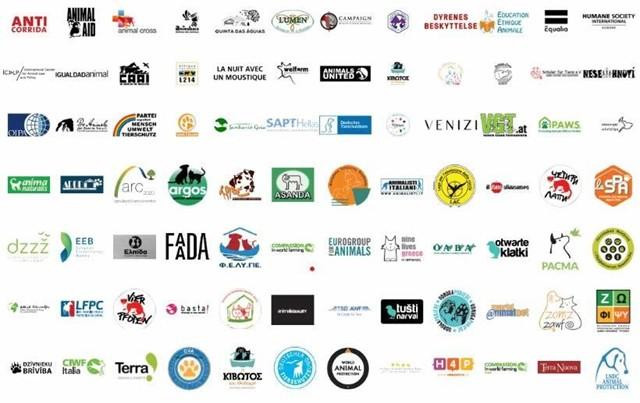
Your organisation, too, can use the ECI to mobilise for your cause!
Further references
-
- Practical guidance section
- Ask an expert section, where you can receive free legal and campaigning advice
-
Local contacts: National contact points and ECI Ambassadors
Stay up to date!
- Subscribe to the monthly newsletter (EN+ 23 languages) to stay in the loop on ECI News: https://citizens-initiative.europa.eu/newsletter/subscribe
- Join the ECI Facebook group
The opinions expressed on the ECI Forum reflect solely the point of view of their authors and can in no way be taken to reflect the position of the European Commission or of the European Union.