About My Voice, My Choice: For Safe and Accessible Abortion
“My Voice, My Choice: For Safe and Accessible Abortion” is the twelfth European Citizens’ Initiative (ECI) that successfully collected the required support. The initiative proposed the creation of a voluntary EU financial support mechanism to assist Member States in providing abortion care to those who cannot access it in their own country.
Registered on 10 April 2024, “My Voice, My Choice” quickly gained momentum. The campaign officially began collecting signatures on 24 April 2024 and collected 1,124,513 verified statements of support. Minimum thresholds were reached in 19 Member States. The collected signatures were promptly submitted to respective national authorities for verification.
Following the verification process, the initiative was formally submitted to the European Commission on 1 September 2025. The Commission responded by adopting a Communication outlining its intended actions in response to the initiative on 26 February 2026.
Initiative registered
10/04/2024
Start of signature collection
24/04/2024
Signature collection period closed
24/04/2025
Initiative submitted to the European Commission
01/09/2025
Initiative answered by the European Commission
26/02/2026
Hints and tips for future organisers
Having a trusted lead in every EU country ensures that signature collection, events, and outreach are locally anchored and culturally relevant.
Even small individual contributions — a few signatures, a shared post, a €5 donation — add up to a movement. Put your ego aside and keep the shared goal at the centre.
“My Voice, My Choice” gathered support not only from feminist and reproductive health groups, but also from climbing associations, university groups, musicians, and actors. Unexpected allies widen the circle of support.
A single post or video from a trusted public figure can mobilise thousands in hours. But influencer engagement should complement — not replace — grassroots coalition-building.
Combine foundation grants, individual donations, and creative streams such as merchandise sales to fund printing, travel, legal support, and events.
The strategy behind this initiative
Preparation
The origins of “My Voice, My Choice” lie in the aftermath of the 2022 US Supreme Court decision to overturn Roe v. Wade, which prompted Nika Kovač — then living in the United States — and her close collaborator Sarah to consider the possibility of a similar regression in Europe. Drawing on her experience at the Institute of the 8th of March, a Slovenian feminist organisation that had already succeeded in changing domestic laws through signature campaigns, Kovač saw the European Citizens' Initiative as the ideal instrument: the only democratic tool that allows citizens to directly propose changes to EU law.
The preparatory phase focused on crafting a proposal that was both legally grounded in EU competences and emotionally compelling to citizens across 27 different national contexts. The organisers were aware that requesting to harmonise national abortion laws would have exceeded EU competence in public health. Therefore, they decided to call for a targeted financial solidarity mechanism enabling cross-border access to safe abortion for women who lacked it in their home country.
Building a network of partners and volunteers
“My Voice, My Choice” grew into one of Europe's largest feminist movements, with the support of over 300 organisations and national coordinators in virtually every EU Member State. The organisers structured the campaign around national coordinators who could connect civil society, political actors and individual citizens at the local level, organising events and collecting signatures in ways that resonated with their own communities.
The campaign also attracted unexpected allies, including a climbing association, university groups, and cultural figures such as singers and actors. This inclusive approach allowed the initiative to reach audiences that would not typically engage with feminist or reproductive rights advocacy.
Organisers have up to six months from the registration date to choose the date to start collecting signatures, allowing time for preparation. The “My Voice, My Choice” team decided to begin signature collection two weeks after registration.
Fundraising and resources
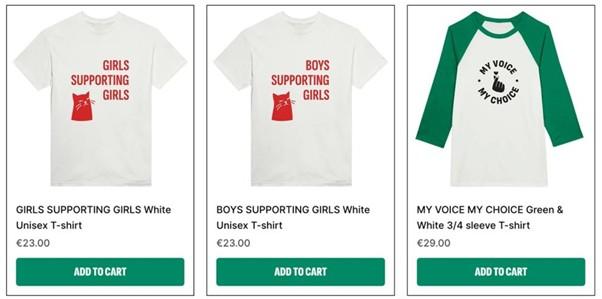
The campaign's funding combined support from foundations, individual donations, and an innovative merchandise stream through the campaign's web store. Items such as T-shirts, hoodies, and mugs bearing the "My Voice, My Choice" slogan generated both revenue and a sense of community solidarity — with volunteers reporting the particular joy of spotting a campaign T-shirt being worn in an unfamiliar city.
The largest budget items were legal advice , printing materials, event organisation, and travel expenses. The organisers emphasise that limited resources need not prevent a campaign from succeeding — energy, determination, and sleepless nights can compensate for a smaller budget, provided the underlying cause is strong.
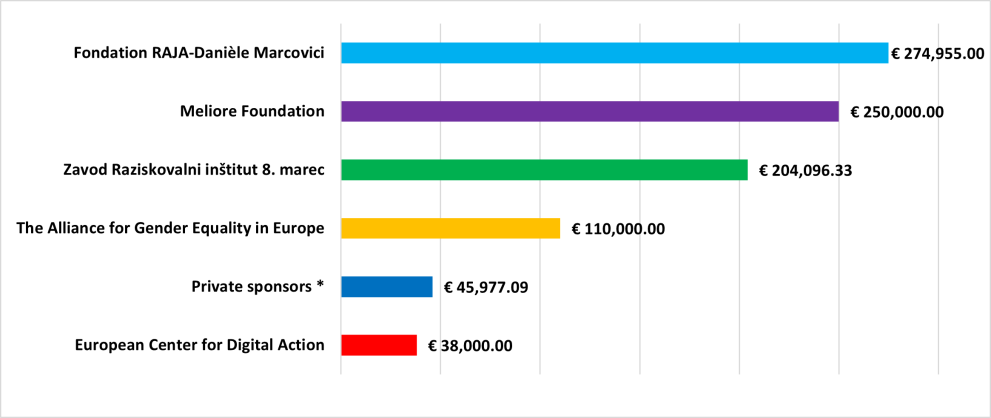
Note: Further information on “My Voice, My Choice” support and funding is available on the "My Voice, My Choice” initiative page in the ECI Register. Note on the private sponsors*: roughly 22 contributions were received by private sponsors, ranging from 250 to 5000 euros.
Campaign strategy and signature collection plan
The “My Voice, My Choice” campaign applied what its organisers describe as the PEACE Formula: Patience, Engagement, Action, Courage, and Errors. Each element played a distinct role in translating a bold idea into over one million signatures.
Patience: Patience was needed to navigate the complex process of identifying partners, refining the proposal, and building the initial network of national coordinators before even launching collection.
Engagement: Engagement meant reaching beyond the core base of existing supporters to connect with the 'movable middle' — people who were not yet engaged with the issue but shared underlying values that could motivate them to sign.
Action: Action involved maintaining steady momentum through public events, media appearances, dedicated action days, and signature-collection activities held at both political and apolitical venues such as marathons and community festivals.
Courage: Courage was required to face online harassment, smear campaigns, and political opposition — and to take calculated risks, such as reaching out directly to influencers who could amplify the campaign in countries where thresholds had not yet been met.
Errors: Errors were treated as learning opportunities: each unsuccessful event, low-engagement post, or rejected partnership became a source of insight for refining the campaign's approach.
The campaign saw an initial surge of nearly 100,000 signatures in its first week, but the organisers recognise that this early wave of committed supporters was only the beginning. The real work involved strategic outreach to new, often unreached audiences through tailored messaging, collaborations with unexpected partners, and creative use of social media.
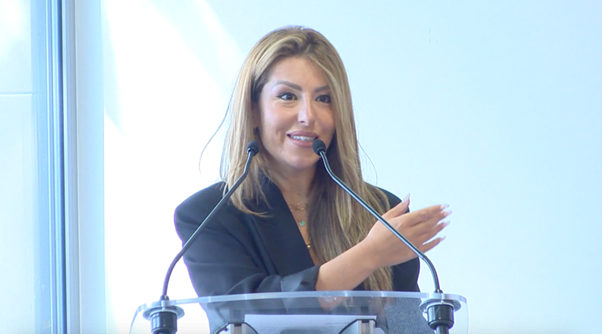
The campaign received particular support of influencers and opinion leaders to overcome the algorithmic barriers that social media platforms increasingly impose on content classified as 'political'. When Croatian pop star Severina appeared at the Brussels press conference on 1 September 2025 to mark the formal submission of the initiative, she brought the campaign's message to an audience of millions across the former Yugoslav region and beyond. Greek journalist and TV anchor Anastasia (Natasa) Giamali similarly provided both mainstream media reach and digital mobilisation through Instagram Reels and opinion columns. Her experience demonstrated that even controversy — in the form of attacks from reactionary politicians — could be turned to the campaign's advantage by raising awareness.
Signature collection and verification process
“My Voice, My Choice” used the European Commission's central online collection system throughout its collection period. Signature collection opened on 24 April 2024 and closed a year later.
The initiative ultimately collected signatures from all 27 EU Member States. “My Voice, My Choice” was formally submitted for Commission’s examination on 1 September 2025. Following formal verification by national authorities, 1,124,513 signatures (out of 1,224,998 collected) were confirmed as valid. The required minimum thresholds were exceeded in 19 Member States, more than twice the seven-country minimum required under EU law.
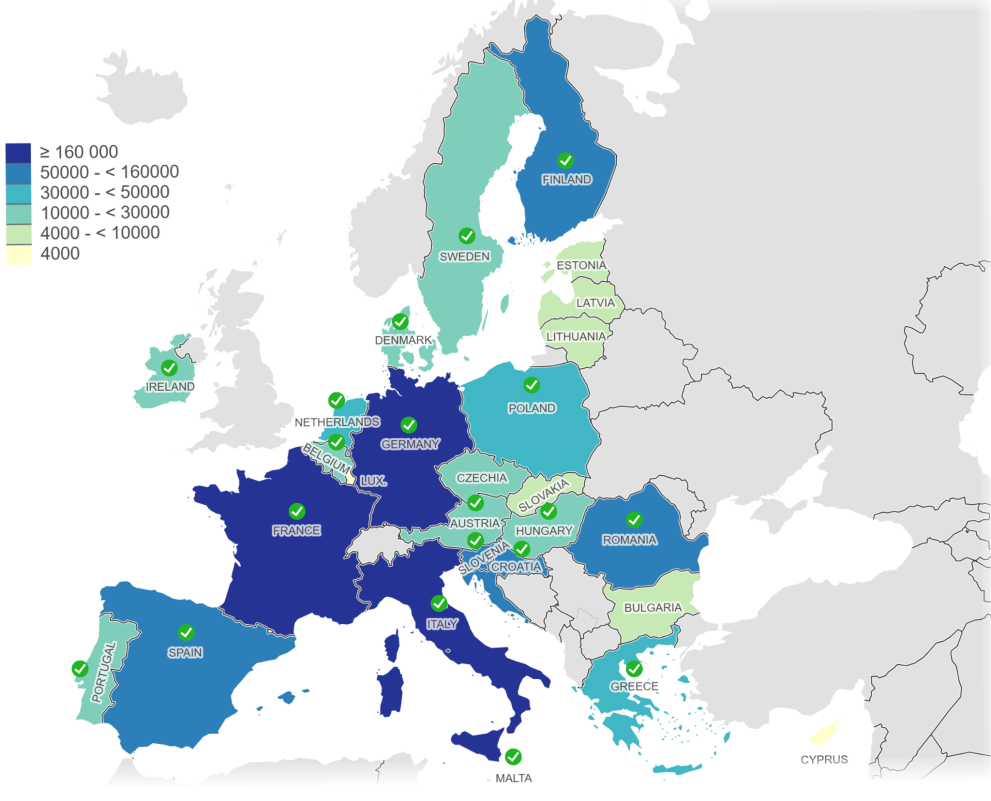
“My Voice, My Choice” reached the minimum thresholds in nineteen Member States Source: European Citizens' Initiative website, 2026. The full table with statements of support is available on the dedicated Commission's webpage.
In the months preceding the formal submission, the organisers shifted from public mobilisation to institutional engagement, holding meetings with Members of the European Parliament to prepare the ground for a positive institutional reception.
The impact of this initiative
Formal submission and meeting with the Commission
The initiative was formally submitted to the European Commission on 1 September 2025. On the same day, the organisers held a press conference in Brussels at which Croatian pop star Severina and Greek journalist Anastasia (Natasa) Giamali expressed their public support.
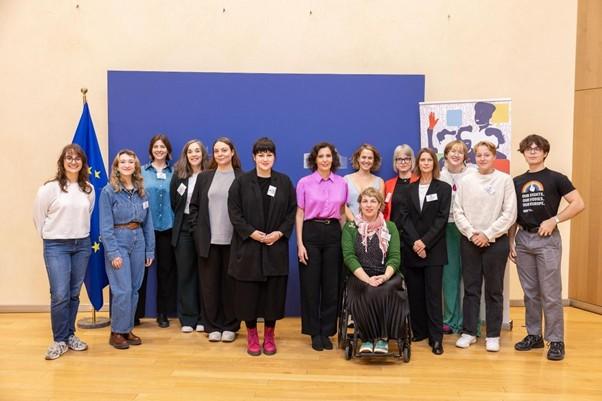
On 1 October 2025, in line with Article 15 of the ECI Regulation, the organisers met with Hadja Lahbib, European Commissioner for Equality and Preparedness and Crisis Management and Commission officials, at the European Commission in Brussels. The meeting brought together coordinator Nika Kovač and other members of the “My Voice, My Choice” team.
European Parliament public hearing
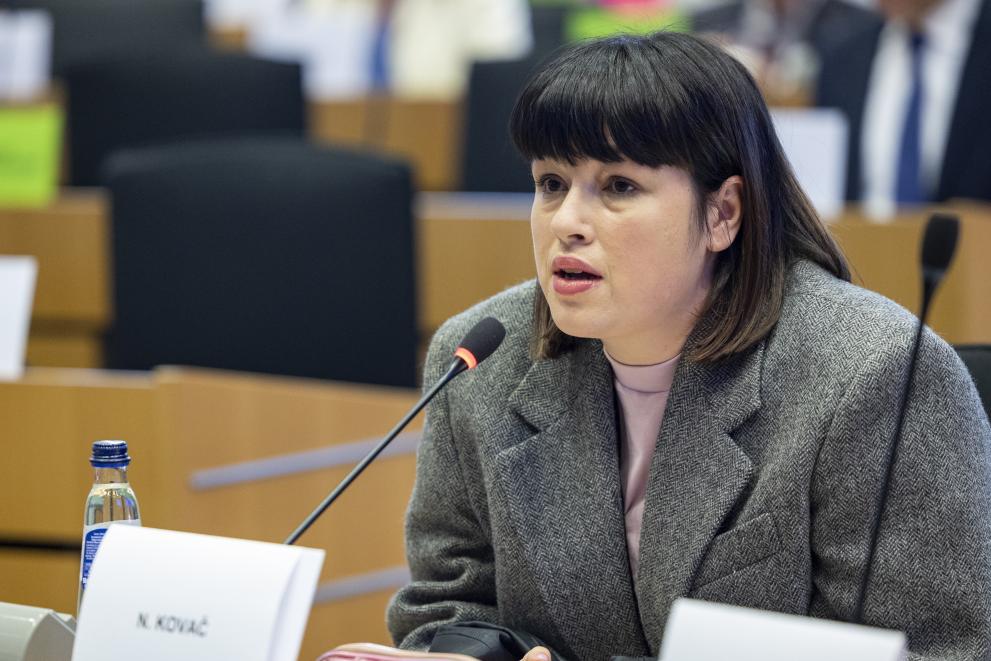
The role of the Committee on Women's Rights and Gender Equality (FEMM) was crucial in supporting the “My Voice, My Choice” initiative. On 5 November it adopted a draft resolution backing the ECI, which passed with 26 vote in favour, 12 against and no abstentions, reflecting broad support in the Committee and marking a major step for the initiative. Then, on 2 December 2025, the European Parliament held a public hearing (see recording) on the initiative, organised by the FEMM Committee with the involvement of the Committee for Petitions (PETI) and the participation of other relevant Committees (DEVE, SANT and LIBE).
Commissioner Lahbib gave a speech as well. The organisers presented the initiative's objectives and engaged directly with Members of the European Parliament.
Plenary debate and resolution in the European Parliament
On 16 December 2025, the initiative was debated at the European Parliament's plenary session in Strasbourg. On 17 December 2025, the Parliament adopted a resolution expressing its support for the initiative, with 358 votes in favour, 202 against, and 79 abstentions. The rapporteur was Abir Al-Sahlani MEP (Renew, Sweden).
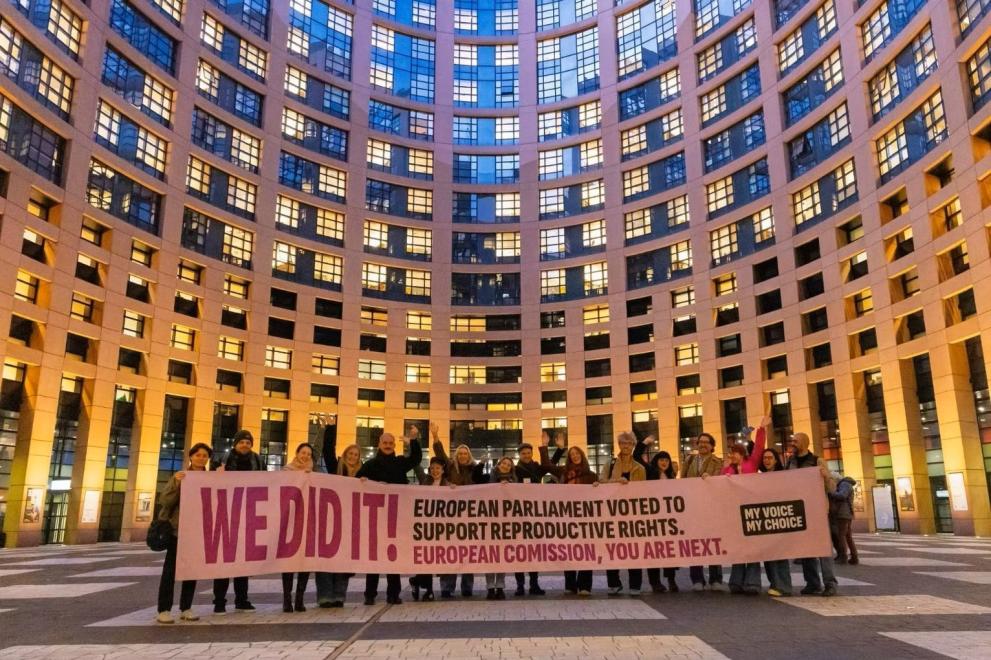
The activists of "My Voice My,Choice" celebrating at the European Parliament in Strasbourg. Source: “My Voice, My Choice” Website.
The resolution was a significant political milestone, demonstrating broad cross-party support for the initiative's goals and signalling to the Commission the strength of parliamentary backing for action on reproductive rights (see Press Release).
European Commission's formal response
On 26 February 2026, the European Commission adopted a Communication setting out its reply to the initiative. Having carefully analysed the proposal and taken into account the EU Treaties' limitations on EU competence in the area of public health, the Commission confirmed that Member States can use the European Social Fund Plus (ESF+) to fund improved access to safe and legally available abortion services.
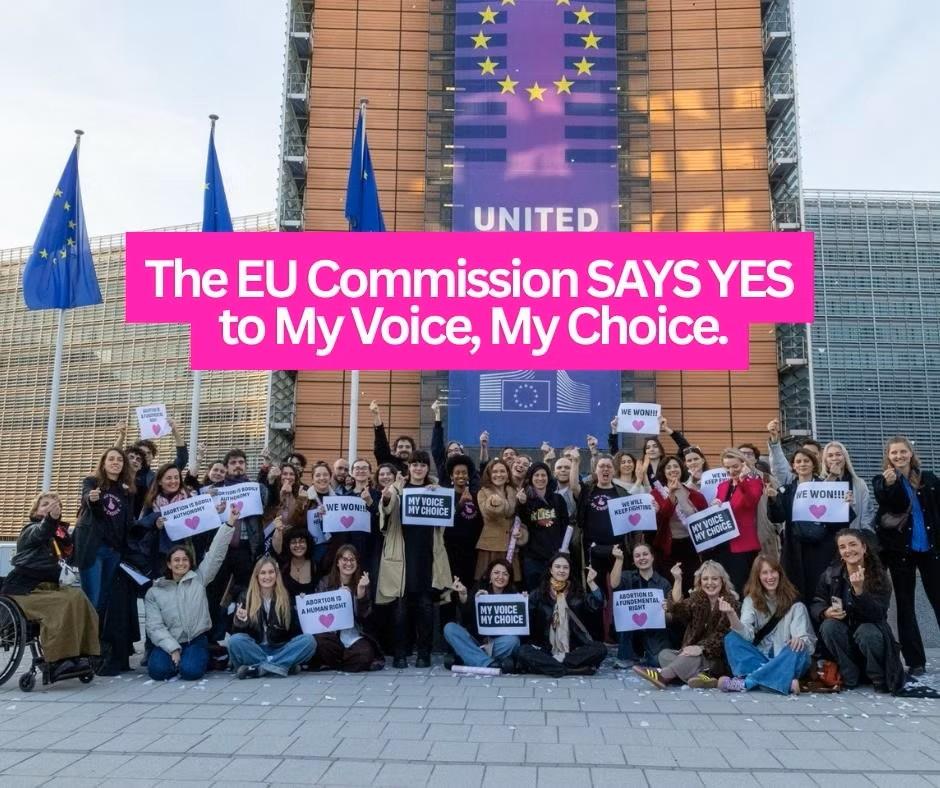
The activists of "My Voice My,Choice" celebrating in front of the European Commission in Brussels. Source: “My Voice, My Choice” Website.
The Commission underlined that this support can be provided relatively quickly through existing instruments, without the need for new legislation, provided Member States voluntarily choose to allocate or reallocate available resources under their ESF+ programmes.
The organisers acknowledged that while the response was not identical to their request, it opened a meaningful and potentially far-reaching pathway. Their next phase of campaigning will focus on encouraging individual Member States to commit ESF+ funding to improving access to safe abortion services.
See the Commission's press release and Remarks by Executive Vice-President Mînzatu and Commissioner Lahbib on the Commission's reply.
What helped this initiative achieve a successful collection of signatures?
The support of over 300 organisations and a vast volunteer network spanning all 27 Member States created a campaign infrastructure capable of sustaining momentum over 12 full months of collection. The diversity of partners — from feminist organisations to climbing associations, from university groups to pop stars — allowed the campaign to reach audiences far beyond the traditional boundaries of reproductive rights advocacy.
“My Voice, My Choice” demonstrated how trusted public figures can overcome both algorithmic restrictions on 'political' content and the structural challenge of reaching new audiences across 27 national contexts. The campaign's influencer strategy was deliberate, targeted, and when needed, characterised by the courage to reach out to figures whose support was uncertain.
The campaign's organisers embraced mistakes as learning opportunities and continuously refined their approach in response to what was working and what was not. Events were organised at apolitical venues, messaging was tailored to local contexts, and coalition-building extended to partners that would not normally be associated with feminist advocacy.
“My Voice, My Choice” did not treat the one-million-signature milestone as the end of the process. The organisers invested heavily in the post-collection phase, building relationships with Members of the European Parliament and Commission officials, preparing for the Parliament hearing and plenary debate, and working to ensure that the Commission's response opened — rather than closed — a meaningful path to impact.
Additional information
Additional information regarding “My Voice, My Choice”: For Safe and Accessible Abortion' is available on the dedicated Commission's webpage and on the initiative's own website at www.myvoice-mychoice.org.
Discover more
- Building momentum: the funding and strategy behind the “My Voice, My Choice” initiative — ECI Forum Blog
- Patience, Engagement, Action, Courage, Errors: The Formula that Leads to a Winning ECI Campaign — ECI Forum Blog
- Why influencers and opinion leaders can make or break your ECI — ECI Forum Blog
- What happens after 1 million signatures in a European Citizens' Initiative? — ECI Forum Blog
- Webinar: Understanding Campaign Structures for Effective European Citizens' Initiatives, February 2025 — ECI Forum
The opinions expressed on the ECI Forum reflect solely the point of view of their authors and can in no way be taken to reflect the position of the European Commission or of the European Union.
The opinions expressed on the ECI Forum reflect solely the point of view of their authors and can in no way be taken to reflect the position of the European Commission or of the European Union.