About the “Stop Destroying Videogames” initiative
“Stop Destroying Videogames” was the fourteenth European Citizens’ Initiative (ECI) answered by the European Commission’ after successfully collecting more than one million valid signatures between 31 July 2024 and 31 July 2025.
The organisers called on the Commission to introduce rules to prevent publishers from remotely disabling videogames without first providing reasonable means for them to continue functioning without the publisher’s involvement.
The campaign ultimately mobilised significant support from citizens across the EU. Following the verification of signatures collected, the initiative was formally submitted to the European Commission together with certificates confirming the validity of 1,294,188 signatures.
The European Commission adopted its official response on 16 June 2026 through a Communication (see the press release). In its assessment, the Commission noticed that under EU copyright law, rights holders enjoy exclusive rights over their creations, making it therefore difficult for the Commission to act. At the same time, it underlined that existing EU consumer law already provides for important safeguards protecting the economic interests of consumers.
Nevertheless, in order to address citizens’ concerns, the Commission committed to initiating discussions with the video game industry and consumer representatives with the aim of developing an industry code of conduct on the end-of-life of video games.
It also committed to working with consumer organisations and authorities to raise awareness of the existing rights protecting consumers, including safeguards for their economic interests.
The successful mobilisation of “Stop Destroying Videogames” shows that an issue rooted in the everyday experiences of citizens can grow into a Europe-wide conversation. By bringing together more than one million supporters around a shared concern, the initiative demonstrates how the ECI can give citizens a platform to raise new issues, build momentum across borders and bring their ideas to the attention of the European institutions.
Registered
19/06/2024
Collection start date
31/07/2024
Collection closed
31/07/2025
Verification
11/08/2025
Valid initiative
26/01/2026
Answered initiative
16/06/2026
Hints and tips for future organisers
The organisers translated a technically and legally complex issue around digital ownership into a straightforward message about consumer rights and preserving access to games people had paid for. Framing the issue in terms of everyday consumer experiences made it easier for people beyond the gaming community to understand why it mattered and support the initiative.
The organisers focused their outreach on the gaming community, where people were already familiar with the issue. Building relationships with prominent content creators and opinion leaders helped amplify the campaign's message and reach much wider audiences. Online communities such as Discord and Reddit also provided important spaces to engage potential supporters and mobilise them across borders.
A committed grassroots network can significantly extend the reach of an ECI. “Stop Destroying Videogames” mobilised around 4,000 volunteers, providing them with practical manuals, communication materials, localised campaign assets and onboarding support. Equipping supporters with the right tools and clear guidance enabled them to promote the initiative within their own networks and adapt the message to different audiences and countries.
A successful campaign does not necessarily follow a linear path. Despite collecting around 350,000 signatures in its first month, “Stop Destroying Videogames” experienced a significant slowdown before regaining momentum through renewed engagement and support from prominent content creators. Staying responsive, finding new ways to reconnect with supporters and adapting your approach can help overcome difficult periods. Beyond signature collection, maintaining relationships with policymakers and other stakeholders can also help keep the issue visible and support longer-term advocacy.
An ECI can open the door to important discussions with the European institutions, but it can be even more effective when combined with sustained advocacy and engagement throughout the process. Building relationships with Members of the European Parliament, policymakers and other relevant stakeholders early on can help keep the issue visible and contribute to a wider policy debate.
From idea to registration
“Stop Destroying Videogames” emerged from a growing concern within the gaming community: an increasing number of videogames depend on publishers’ servers to remain playable. While this model is not inherently problematic, games can become completely unplayable when publishers end support and shut down their servers, effectively devaluing copies that consumers have purchased.
The organisers wanted to address this issue by ensuring that consumers could retain access to the games – that they had paid for – in a playable form. They argued that publishers’ practices raised concerns under EU consumer law, in particular Directive 93/13/EEC on unfair terms in consumer contracts, which requires digital companies to act in good faith and offer fair and transparent terms of use to their users.
To develop their proposal, the organisers spent several months researching EU consumer law and consulting legal experts. This helped them clarify the problem they wanted to address and formulate a concrete request: publishers should not be able to remotely disable videogames without first providing reasonable means for them to continue functioning without the publisher’s involvement.
With this request in mind, the organisers decided to launch their European citizens’ initiative.
The strategy behind the initiative
Fundraising and resources
The campaign was initially presented as a non-funded volunteer initiative, with the organisers emphasising that time, energy and a committed community could make a campaign possible even without significant financial resources. Most of the campaign was indeed run with limited costs, relying heavily on social media and volunteers.
Towards the end of the collection period, however, the initiative received €24,000 from a private sponsor. The organisers also reported their volunteer support on the dedicated page of the ECI website, highlighting its value to the campaign.
Campaign strategy
The campaign strategy was already taking shape before signature collection began. The initiative emerged alongside a wider global movement around the issue.The organisers recognised that the subject could be difficult to understand for people who were not familiar with the technical or legal aspects of videogames. Their response was to simplify the message and frame it primarily around consumer protection and preservation, while adding a democratic dimension: citizens were not simply asked to agree with an issue, but to exercise their democratic right through the ECI.
Once the message had been developed, the organisers focused on identifying their natural allies and potential supporters. They chose to concentrate their outreach on the gaming community, where they knew people were already familiar with the issue and likely to engage with it. This shaped the campaign’s digital communication strategy, driven by video content, social media, and community forums, such as Discord and Reddit that became important spaces for mobilisation.
A central part of the strategy was to give volunteers the tools they needed to become campaigners themselves. The organisers produced two manuals: one explained how to collect signatures in different countries and languages, taking into account the different information requirements for signatories in each Member State; the other provided a media package containing the campaign’s core message and a QR code linking directly to the online collection system.
Volunteers were also actively onboarded to familiarise them with the platforms, tools and campaign strategy, enabling them to quickly put the methods into practice, share consistent information and adapt their outreach to different audiences. To support this, volunteers received localised campaign assets that allowed them to target specific communities and communicate the issue in ways that were relevant to them. The message was therefore adapted to different contexts, with volunteers highlighting how the issue affected their particular audiences. This not only helped explain a complex topic such as digital ownership to the wider public but also fostered a sense of shared ownership of the campaign’s success.
The campaign was ultimately powered by a network of around 4,000 volunteers, coordinated primarily through Discord, a platform widely used by gamers. This allowed the organisers to divide volunteers into groups, assign roles such as volunteer or manager, set clear posting limits and direct teams towards specific countries or online communities. As Pavel Zálešák, one of the organisers, puts it: “If someone connects to your Discord, it means they really care about what you’re doing.” In some cases, groups of around 20 volunteers would join livestream chats and contact gaming content creators in an effort to attract their attention and, through them, the attention of thousands of viewers. Building relationships with content creators therefore became an important part of the campaign’s outreach strategy.
The strategy produced an explosive start. The campaign collected around 350,000 signatures in its first month.
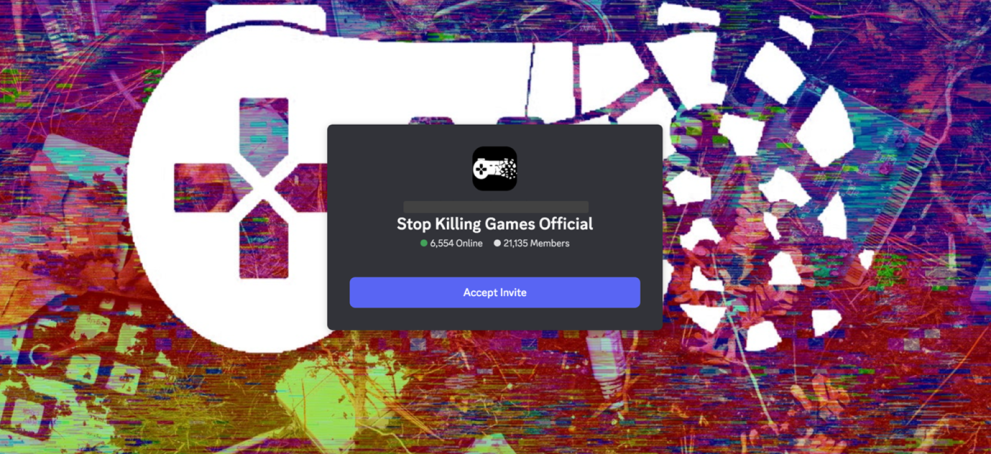
This initial momentum did not last, leading the campaign to a period of significant slowdown. By June, with only two months remaining, the total had reached approximately 450,000 signatures. For a campaign that had started so strongly, the sudden loss of momentum was a major challenge.
The situation began to change when Ross Scott, the American YouTuber behind the online 2024 Stop Killing Games movement, which inspired the ECI, brought the issue back into the spotlight. In a video, Scott warned that the initiative was at risk of failing and explained the reasons behind its loss of momentum. This was followed by a public disagreement with popular Twitch streamer Pirate Software over one of the movement’s central goals: ensuring that older videogames remain playable even after publishers stop supporting them.
The organisers exploited this moment to put their position and the facts behind the initiative before the gaming community so that people could make up their own minds. This response resonated strongly within the gaming community, and prominent content creators including famous names like MoistCr1TiKaL, Asmongold, Notch, and even PewDiePie expressed support for the campaign. This triggered a dramatic new surge in signatures. On one day alone, the initiative collected 160,000 signatures.
The campaign therefore managed to rebuild momentum when it seemed to be losing it. By the time the deadline arrived, it had collected around one million additional signatures.
The experience of “Stop Destroying Videogames” shows that successful campaigning is not always a linear process. A strong start can be followed by a period of stagnation, but an engaged community, clear communication and the ability to adapt can create new momentum and ultimately achieve the goal of 1 million signatures.
Signature collection, verification process and submission
The “Stop Destroying Videogames” initiative officially opened its signature collection period on 31 July 2024. After a strong start, with around 350,000 signatures collected during the first month, the collection rate slowed significantly. Following renewed efforts to mobilise supporters, the campaign regained momentum and ultimately surpassed the one-million-signature milestone.
After the collection period ended, the initiative was formally submitted for examination by the Member States on 11 August 2025. Once the verification process was completed, 1,294,188 statements of support were confirmed as valid.
Number of valid signatures collected by “Stop destroying Videogames” per Member State
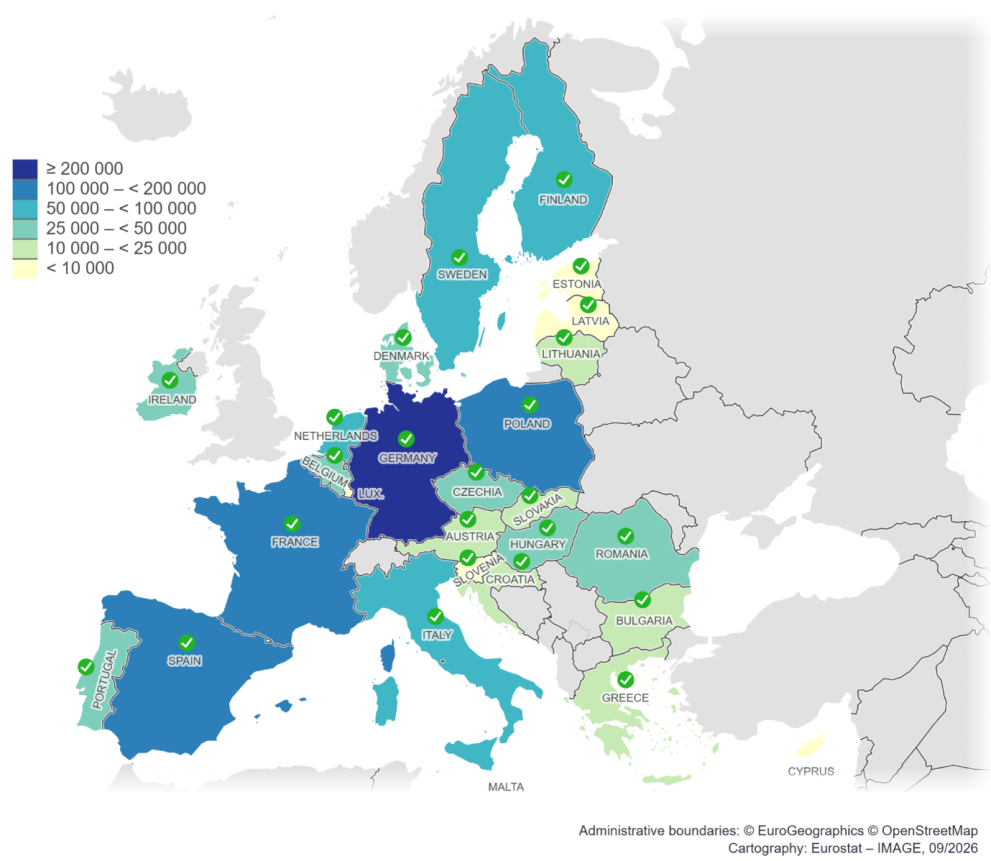
Note: “Stop destroying Videogames” reached the minimum thresholds in 24 Member States, as shown by the green checkmarks. Source: European Citizens' Initiative website, 2026. The full table with statements of support is available on the dedicated webpage of the ECI website.
The organisers did not identify specific target countries for their campaign. As much of their engagement took place online, they viewed their audience as one virtual community, rather than as separate national audiences. Through online platforms, they were able to engage fans, supporters and volunteers across Europe and beyond, allowing the campaign to spread organically across national borders.
This approach translated into an exceptionally broad geographical reach: the initiative met the minimum thresholds of signatures in 24 Member States, with only Malta, Cyprus and Luxembourg falling short.
The results illustrate how a digitally organised campaign, supported by a large and motivated volunteer network, can mobilise citizens across borders and build widespread support for an ECI.
Preparing for the institutional phase
Once the signature collection period had ended, the organisers shifted their focus towards submitting the statements of support for verification and preparing their formal arguments for the European Commission. At the same time, they continued to maintain public engagement by keeping supporters informed about the submission timeline and engaging with Members of the European Parliament. The organisers also made a strategic decision to delay the submission of the initiative for Commission’s reply. The first possible date for submission fell soon before Christmas, and they considered that the initiative risked quickly losing public attention. By postponing the submission by some weeks (three months is the maximum allowed), they gained additional time to prepare more comprehensive legal arguments and to align their submission with ongoing debates on digital consumer rights in the European Parliament. This allowed them to approach the institutional phase with a more developed case while seeking to maximise the public and political attention surrounding the handover.
The impact of this initiative
Formal submission and meetings with the Commission
Following the submission of the initiative, its organizers presented their objectives to representatives of the European Commission on 23 February 2026. They met with Henna Virkkunen, Executive Vice-President of the European Commission for Technological Sovereignty, Security and Democracy and Commissioner for Digital and Frontier Technologies, and Michael McGrath, Commissioner for Democracy, Justice, the Rule of Law and Consumer Protection, accompanied by European Commission officials.


European Parliament public hearing
The initiative was also presented at a public hearing of the European Parliament on 16 April 2026. During the hearing, the organisers presented the objectives and arguments behind their initiative, while Members of the European Parliament exchanged views with them on the issues raised. The recording and related materials are available on the webpage of the public hearing.
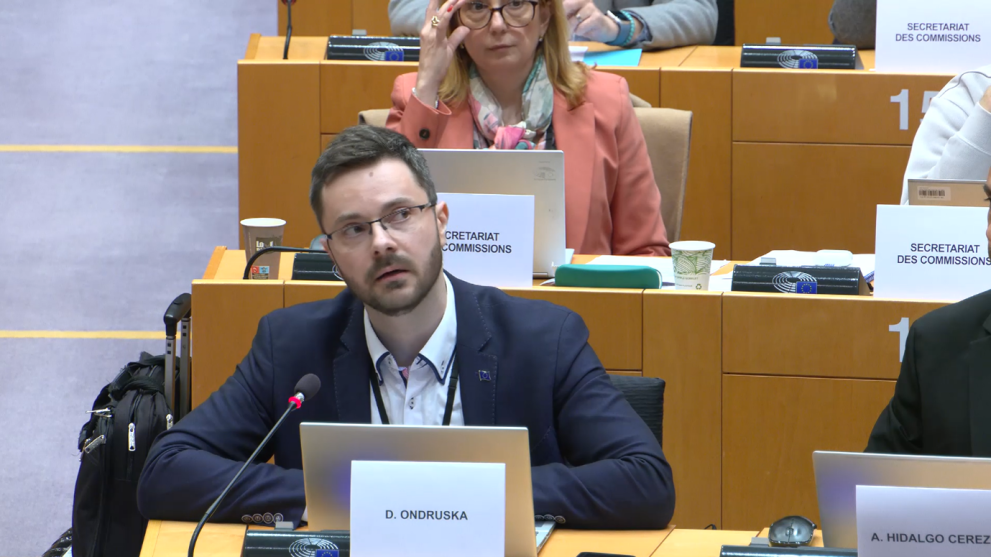
The European Parliament subsequently held a plenary debate on the initiative on 21 May 2026, providing another opportunity for the issues raised by the organisers to be discussed at EU level. The recording of the debate is available online.
Throughout this period, the organisers also invested significant effort in advocacy and engagement. They shared their experience and lessons learned in the ECI Forum blog article, “What happens after 1 million signatures in a European citizens’ initiative? Lessons from organisers”.
European Commission's formal response
On 16 June 2026, the European Commission adopted its formal response to the initiative in a Communication (see the Commission's press release). In its response, the Commission stated that, at this stage, it could not propose a legal obligation requiring videogames to remain playable after they are no longer provided commercially. At the same time, it highlighted the safeguards already available to consumers under existing EU consumer law.
As part of its response, the Commission committed to:
- initiate, by the end of 2026, an exchange with the videogame industry and consumer representatives, with the aim of developing an industry code of conduct on managing videogames’ “end of life”;
- work with consumer organisations and authorities to raise awareness of applicable consumer rights, including safeguards protecting consumers’ interests; and
- report on the application of the Directive on digital content and digital services before the end of 2026.
The Commission also noted that active enforcement of existing consumer rights could incentivise providers to offer videogames with longer lifespans and explore solutions that better meet consumer expectations.
The initiative therefore brought the concerns raised by its organisers beyond the signature collection campaign and into discussions with both the European Commission and the European Parliament, while contributing to a wider EU-level conversation about consumer rights and the long-term accessibility of videogames.
The follow-up
The organisers considered that the Commission’s response did not fully address the broader EU-level concerns raised by the initiative, while recognising that developing and implementing EU-wide policy in this area presents legal and practical challenges. Reaching the required signature threshold is a significant achievement in citizen participation, but it does not necessarily mean that the specific policy or legislative request can be brought forward by the European Commission.
At the same time, the ECI process brought the issue to the attention of the European institutions and contributed to its discussion within the wider EU policy debate. Their experience therefore illustrates how an ECI can form one part of a broader, longer-term advocacy strategy, combining citizen mobilisation with continued dialogue with policymakers and other relevant stakeholders.
For additional information on the follow-up of the initiative, please visit the following Commission's page.
Additional information
Additional information regarding “Stop Destroying Video Games” is available on the dedicated page in the ECI website.
The opinions expressed on the ECI Forum reflect solely the point of view of their authors and can in no way be taken to reflect the position of the European Commission or of the European Union.